Judge dismisses FBI officials' perjury charges over Hunter Biden laptop testimony
Magistrate Zia Faruqui ruled Monday that the government failed to prove probable cause for the two agents, citing the case as an example of Justice Department weaponization.
By Fatima Davis ·
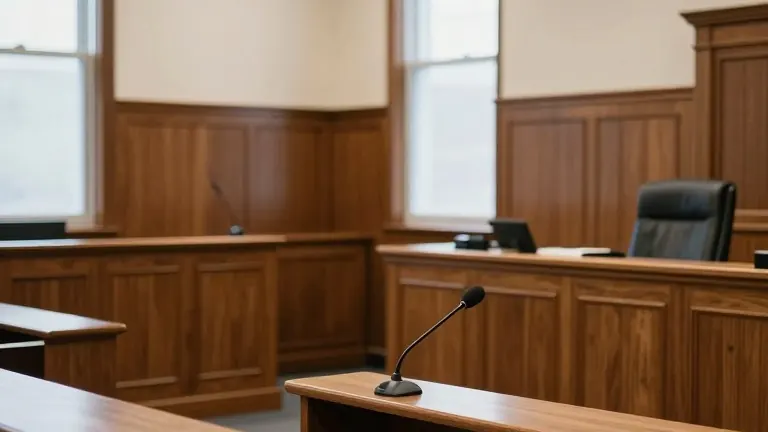
A federal magistrate judge in Washington dismissed perjury charges Monday against two former FBI officials who testified about the Hunter Biden laptop investigation in 2023. US Magistrate Judge Zia Faruqui ruled that the case against Nikki Floris and Bradley Benavides could not proceed, describing the prosecution as nothing other than weaponization of the Justice Department.
The dismissal followed a two-day probable cause hearing for Floris and Benavides, both formerly employed by the FBI’s now-defunct Foreign Influence Task Force. Prosecutors argued the pair downplayed their knowledge of the bureau’s probes into the former first son during interviews with the House Judiciary Committee. Benavides specifically told the committee he learned the details of the investigation from Wikipedia.
Judge Faruqui evaluated ten alleged lies individually rather than in the aggregate. The Department of Justice required proof of only one lie per defendant to establish probable cause. By weighing each accusation on its own merits, the judge found insufficient evidence to keep the case alive.
Floris’ attorney, Margaret Donovan, spent the majority of Wednesday’s proceedings portraying her client as an overworked bureaucrat rather than a strategic liar. Donovan noted that Floris supervised between 200 and 300 employees, a number that rose to 600 after her promotion to acting assistant director. She argued that in such a high-volume environment, stray messages regarding Hunter Biden were bound to slip through administrative cracks.
Defense counsel challenged the government’s forensic review of Floris’ communications. FBI Special Agent Bryan Witt testified that agents examined hundreds of thousands of internal messages line by line. Donovan questioned the fairness of selecting five or six conversations from that massive dataset. She asked Witt if he considered the demands of her position, to which he replied that he did not see the relevance.
Donovan also highlighted mitigating circumstances, including the fact that Floris was not prepared specifically on the Hunter Biden topic before her committee appearance. She pointed out that the events in question occurred three years prior to her testimony and that the questioning began at 10 a.m., a time the defense characterized as early morning. Witt countered by asking if the specific start time was relevant, noting that the committee had Democratic staff despite Witt’s initial uncertainty.
Much of the cross-examination focused on the semantic meaning of the word involved. Floris testified that she did not involve herself in the Hunter Biden investigation. Donovan argued this was technically true depending on how involved was defined and which specific probe was referenced. She emphasized that Floris was a counterintelligence official, not a criminal investigator, and that a separate division handled the criminal case.
Witt rebutted by stating that the government charged Floris because she knew she was involved in the Baltimore investigation. He clarified that she became involved by speaking with the criminal division. Ron Safer, Benavides’ attorney, argued the officials could have misspoken without lying. He pointed out that Witt admitted during redirect that he had no idea if the committee employed Democratic staff, despite government exhibits listing them by title.
Safer pressed Witt on this inconsistency, asking if the agent should be inferred to have knowingly violated his oath. Witt conceded he should have said he did not know. Donovan closed by noting that Witt consulted Steve Castor, the committee’s Republican counsel, regarding the relevance of the statements but did not consult Castor’s Democratic counterpart. Witt admitted he was not explained the partisanship nature of the committee.
Witt also testified that FBI Director Kash Patel requested weekly check-ins on the case. Patel called it the first time in Witt’s career that top officials were so involved in a false statements case. The judge tossed a superseding complaint filed by prosecutors after midnight just before the session ended. Floris was seen weeping in the courthouse hallway during a break on Tuesday.
Source: New York Post