
Amazon scraps four Northern Virginia data centers after local pushback
The tech giant will convert 122 acres in Loudoun County into homes and parks, marking a major shift in how AI infrastructure meets community resistance.
By Harper Hassan ·
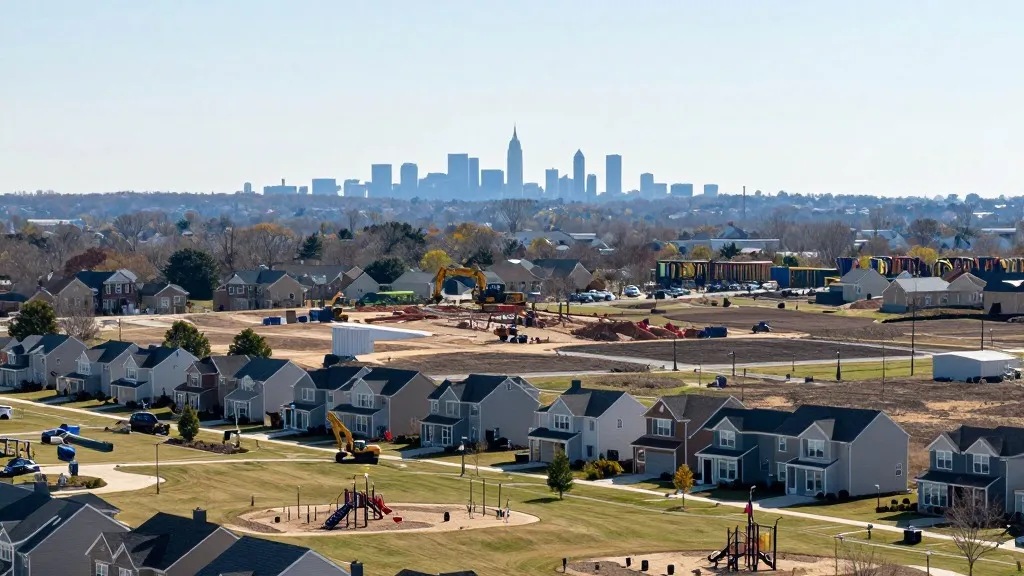
Twelve million dollars in housing funds, 25 acres of donated land, and a complete change of plans: that is the package Amazon is handing over to Loudoun County, Virginia, as it formally abandons its proposal to build four new data centers. The decision comes after intense backlash from local residents who feared the massive facilities would strain the area’s resources. Instead of server farms, the majority of the 122-acre site, formerly part of George Washington University’s campus, will be developed for mixed-use and residential projects.
The site is located just outside Washington, D.C., in a region already known as “Data Center Alley” for having the highest concentration of such facilities on the planet. Amazon originally submitted its proposal in July of this year. However, following a meeting in September between company executives and Loudoun County Board of Supervisors Chair Phyllis J. Randall, the company agreed to pivot. The new plan includes donating 25 acres of the property to the county specifically for a community arts center and a new recreational facility.
This reversal highlights the growing friction between the rapid expansion of artificial intelligence infrastructure and the communities hosting it. While cloud computing has long required significant power, the recent surge in AI demand has pushed requirements to unprecedented levels. Residents have raised specific concerns about the noise generated by cooling systems and the massive electricity consumption these facilities demand, which can lead to spikes in local power prices.
Josh Weissman, Amazon’s vice president for data center development, explained the company’s reasoning in a statement. He noted that Amazon had been eager to purchase the former university campus when the opportunity first appeared. However, the company acknowledged the county’s “pointed concerns about data center development at this particular site.” Weissman added that although Amazon viewed the legal development potential of the property differently than the county did, they decided that a shared vision was preferable to “costly litigation.”
The shift in strategy reflects a broader national trend. Just days before this news broke, President Donald Trump called on data center builders and AI hyperscalers to pay local communities a dividend to offset energy-related price increases. In a social media post, the President suggested that data centers should not only generate their own electricity but also sell or give excess energy back to the local grid. Other issues, such as water shortages and deforestation, are also becoming central to debates over where these facilities should be placed.
Local officials are framing the agreement as a success for community engagement. Phyllis J. Randall stated that by choosing “dialogue over reflexive disagreement,” the county and Amazon created a valuable opportunity for the region. She emphasized that the new development plan provides spaces for residents to gather and create, while also delivering “more attainable homes for working families.”
The agreement serves as a case study in how local governments can leverage community concerns to reshape major tech projects. By negotiating rather than litigating, Loudoun County secured tangible benefits for its residents, including housing and public spaces, without the need for a prolonged legal battle. This approach may set a precedent for other communities facing similar proposals from large technology firms.
Going forward, the site will transition from a planned industrial hub to a residential and community-focused area. The $5 million donation to the county’s housing fund and the creation of the arts and recreational centers will begin the process of integrating the former university land into the local fabric. For now, the four data centers remain unbuilt, leaving the future of AI infrastructure in this specific corridor open to new possibilities.
The move also underscores the economic weight of local opposition in the tech sector. As AI demand continues to drive the need for larger and more powerful facilities, companies may find themselves increasingly willing to adapt their plans to secure the necessary land and community support. The outcome in Loudoun County suggests that while the tech industry is eager to expand, it is also prepared to compromise when local stakeholders present a united front.
Source: Tom's Hardware · original report published