Eisenkot, Netanyahu face coalition math
Neither bloc reached the 61 seats needed for a majority in the 120-seat Knesset, leaving the path to power unclear.
By Fatima Davis ·
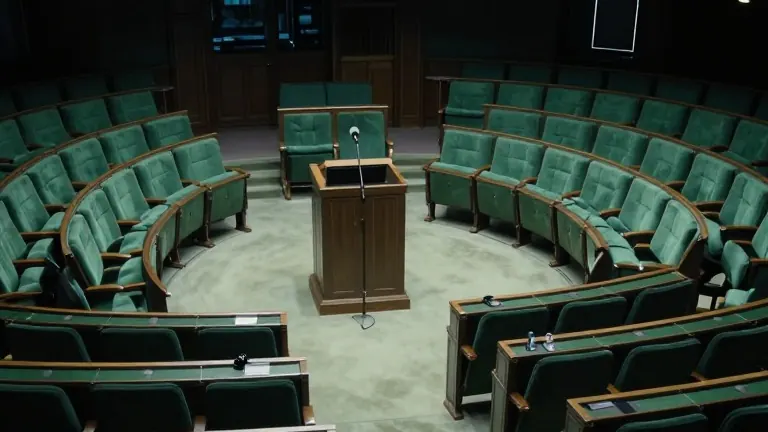
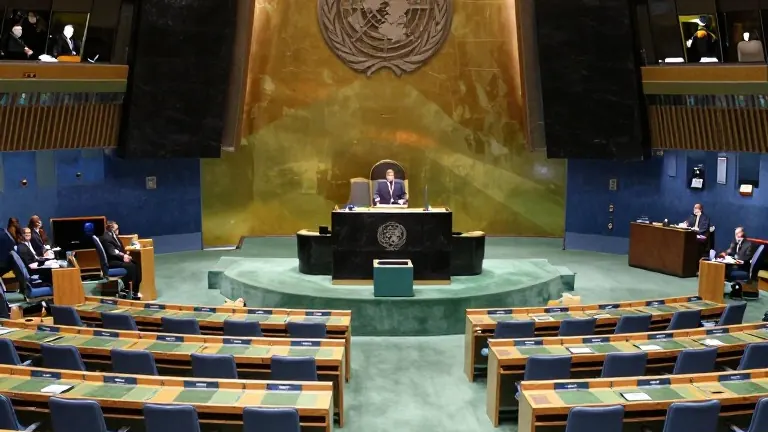
Israel’s election results have left both major contenders without a clear path to form a government. Neither Prime Minister Benjamin Netanyahu nor his challenger, Gadi Eisenkot, can currently assemble the 61 seats required for a majority in the 120-seat Knesset. The outcome creates a political stalemate that will likely stretch into weeks of intense negotiation.
Opposition parties secured more seats than Netanyahu’s right-wing bloc. Eisenkot, a center-right former military chief of staff, leads a coalition that falls short of the governing threshold without support from predominantly Arab parties. His allies frequently rejected this option during the campaign. Netanyahu’s Likud party won the most votes, but his traditional partners in the right-wing, far-right, and ultra-Orthodox spectrum do not hold enough seats to return him to power.
Israel’s president will consult with party leaders in the coming days to determine who gets the first chance to form a government. The president is not bound to pick the leader of the largest party. Instead, the decision rests on who appears most likely to secure a coalition. The chosen candidate has 28 days to gather support from at least 61 lawmakers. The president may extend this deadline by 14 days. If that effort fails, another candidate may be given a turn.
Eisenkot appears more likely to receive the initial mandate based on the vote count. However, he faces a structural hurdle. His bloc lacks a majority without Arab-led parties, which represent 21% of the population. Eisenkot has cited differences on Hamas and the war in Gaza as reasons he cannot govern with them. Some Arab party leaders have refused to condemn Hamas as a terrorist organization. Netanyahu faces a similar deficit, needing to find new partners to reach the magic number.
Four distinct paths emerge from the current numbers. A unity government between Netanyahu and Eisenkot is one option, a structure President Trump reportedly favors. Such a coalition would likely include moderate center and right parties. Eisenkot has promised not to serve under Netanyahu, creating a friction point. A second option involves an Eisenkot government backed by Arab parties from outside the coalition. This combination would control more than 67 seats but contradicts campaign pledges. A third possibility is a repeat election, which Netanyahu might favor if Arab turnout declines. A fourth path involves defections, which would require roughly eight lawmakers to switch sides for Netanyahu or 13 for Eisenkot.
Opposition leaders plan to use their parliamentary strength to pressure Netanyahu during the deadlock. They are considering a motion to replace the speaker of the Knesset. They also aim to establish a state commission of inquiry into the failures preceding the Oct. 7, 2023 attack. Some allies hope to reverse legislation they argue weakened democratic institutions. These moves would not form a government but would give the opposition significant legislative power while negotiations continue.
The threat of renewed war with Iran adds complexity to the political calculus. Netanyahu stated on election night that Israel must complete its mission against Iran. Eisenkot warned against using security concerns for political gain. An analyst named Danny Citrinowicz noted that Netanyahu has an incentive to renew fighting while a government is being formed. He said an emergency would increase pressure on Eisenkot to join a unity cabinet. Eisenkot joined such a cabinet after the 2023 attack but resigned eight months later, citing political motivations.
Source: WYPR