
Six races decide midterm outcomes
From Latino turnout in Florida to young voter margins in Michigan, specific districts and demographic shifts will determine control of Congress.
By Harper Hassan ·
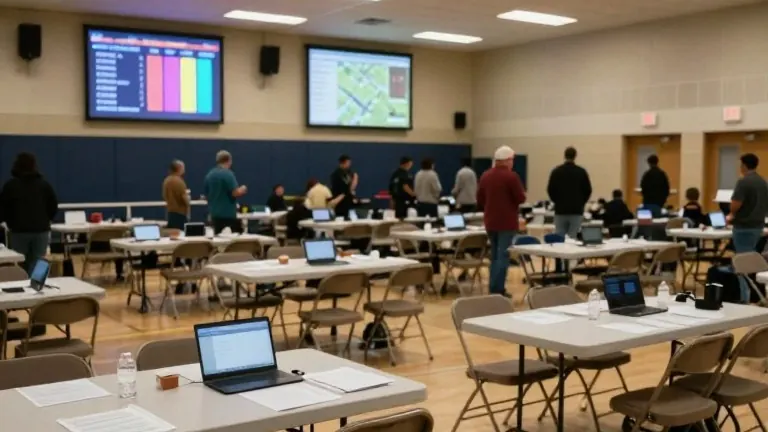
Election night results will reveal who controls Congress through six specific indicators. These markers range from early returns in the Midwest to demographic shifts in the South. Voters in Indiana, Kentucky, and Florida will provide the first signals of the evening.
Results from Indiana and Kentucky will arrive in the 6 p.m. ET hour. Florida, split between Eastern and Central time zones, will yield most House results by 7 p.m. ET. Statewide contests like the Senate and governorship may not be called until 8 p.m. ET. Analysts will watch four specific House districts for early clues: Indiana's 5th, Kentucky's 6th, and Florida's 22nd and 27th.
Indiana's 5th and Kentucky's 6th are Republican-held seats that have become more competitive this cycle. If these races turn close or tip to Democrats, it suggests low Republican turnout and a potential Democratic wave. Florida's 22nd is Democratic but redrawn to favor Republicans. Florida's 27th is heavily Latino and was won by Donald Trump by double digits in 2024. Performance in this district will indicate how Latino voters are casting ballots.
The share of independent voters will determine Republican success. In the decade since Trump entered politics, Republicans have won when they capture at least 46 percent of independents. They have lost when they fall below that threshold. This group is a lower propensity voting block in midterms, making their participation a critical variable.
Black voter turnout in Wayne County, Michigan, will decide the state's Senate race. Abdul El-Sayed needs strong support in and around Detroit to win. Historically, Democrats have needed at least 68 percent of Wayne County to secure the state unless they outperform in the suburbs. Senator Elissa Slotkin won the county with 63 percent in 2024, a lower margin than previous winners like Debbie Stabenow in 2018, who captured 69 percent.
Young voters aged 18 to 29 typically show a sharp drop in turnout during midterms. Their participation rate falls from 43 percent in presidential elections to 21 percent in midterms. Democrats have historically done well when they win this group by more than 20 points. They achieved this margin in 2022, limiting Republican House gains to nine seats while gaining one Senate seat.
In Texas, Democrat James Talarico faces a difficult path. No Democrat has won a statewide office there since 1994. Talarico's chances hinge on the gap between Republican gubernatorial candidate Greg Abbott and attorney general Ken Paxton. In 2018, Ted Cruz won 400,000 fewer votes than Abbott yet still won the Senate seat. Talarico would need a larger gap between the two Republicans to overcome that deficit. He must also outperform Beto O'Rourke's 2018 totals among Latinos, particularly in Cameron, Hidalgo, Webb, and Nueces counties.
Party identification numbers will reflect the political realignment of the Trump era. Democrats held just 31 percent of the electorate in 2024, down from 39 percent in 2008. Despite high enthusiasm levels in recent polls, the party needs a larger share of the vote to succeed. Fifty-three percent of likely voters strongly disapprove of Trump's job performance, a factor that may unify the left. The outcomes in Michigan's Senate race and 7th Congressional District will show how progressive candidates fare in competitive areas.
Source: WYPR