France Escalates Security Measures as Cost-of-Living Protests Hit Second Week
Interior Minister Laurent Nuñez confirmed 135 arrests and a massive police deployment to prevent a repeat of last week's unrest, even as demonstrations continue across major cities.
By Fatima Davis ·
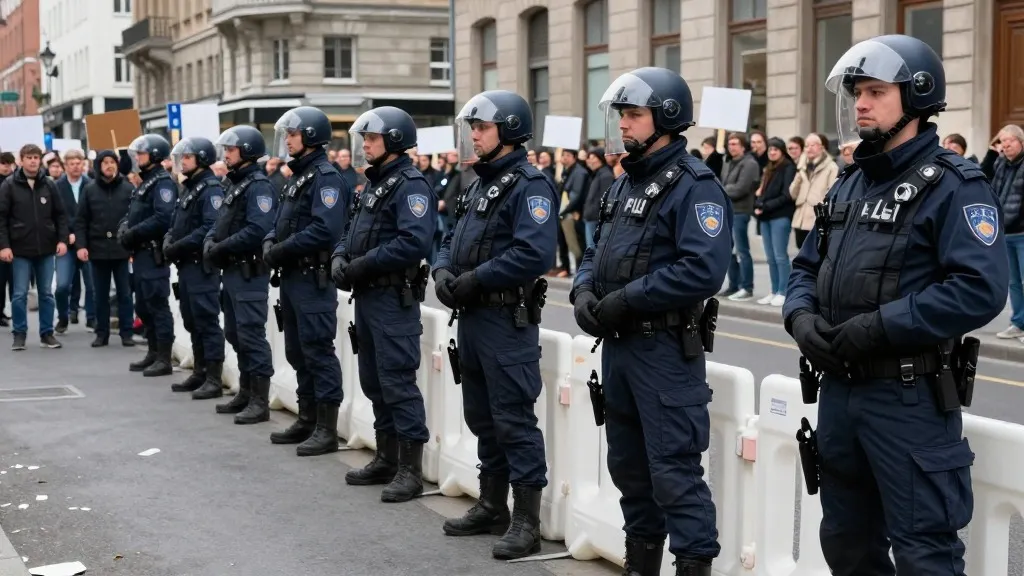
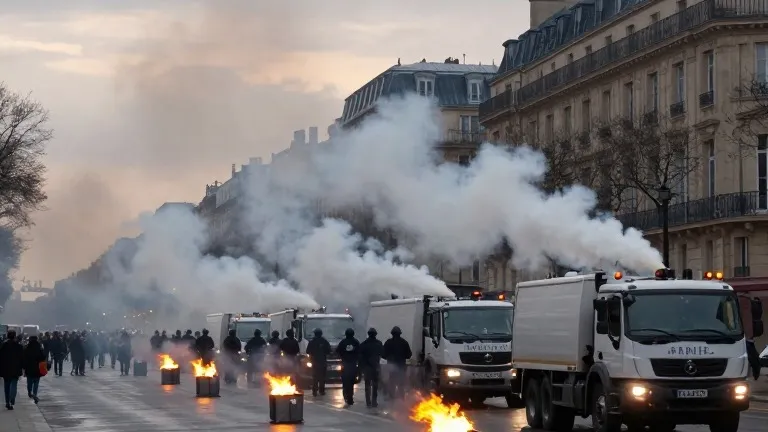
French authorities have tightened their grip on major cities to manage a second consecutive weekend of nationwide protests. On Saturday, police detained dozens of demonstrators and deployed tear gas to maintain order. The primary goal is to prevent a recurrence of the chaos seen last week, when more than half a million people took to the streets to express dissatisfaction with the rising cost of living.
Interior Minister Laurent Nuñez provided specific details on the scale of the response. He announced that 135 people had been arrested and a variety of items were seized. These included metal balls, lead pellets, fireworks, slingshots, steel balls, improvised weapons, a katana, and airsoft guns. Despite these seizures, Nuñez stated that there has been no major incident in the country so far. He noted that up to 70,000 officers are on duty, supported by helicopters, armored vehicles, and water cannons.
The situation varied by city. In Lyon, where demonstrations had been officially banned, approximately 150 protesters near the center briefly blocked a road before police used tear gas. A 21-year-old student described the police as really mobile. The student noted that officers often disperse marches before they even fully form. In Orléans, thousands marched against a congress held by Marine Le Pen's National Rally party. Le Pen is using the event to launch her presidential bid against Emmanuel Macron. Participants chanted slogans demanding Macron resign and Le Pen be put in prison. Police counted 11,000 participants, while organizers claimed the number was 26,000.
In Paris, officials described the mood at the Porte d'Italie as calm. This was the site of the city's only authorized march, which was moved from the Bastille to the southeastern edge at the last minute. Union representative Murielle Guilbert called the relocation scandalous. She argued that Macron has barred protesters from demonstrating where they wish, and that wages have not risen to the level they should. A student named Lucas told CBS Saturday Morning that it is normal for people to be angry under these circumstances.
The unrest has significantly disrupted daily life and cultural events in the capital. Major museums are closed, and many businesses have boarded up their windows. Art Basel opened for only one day on Friday, with the weekend program cancelled. The first NFL game in France, featuring the New Orleans Saints, is still scheduled for Sunday, though some related venues were shut on Saturday. A soccer match between Paris Saint-Germain and Olympique Lyonnais has been moved to Monday night. Approximately 3,000 shops across France were damaged or looted last weekend.
These protests began last month when high school students in southeast Paris demonstrated for better conditions. The movement widened as people demanded relief from rising living costs. The Yellow Vests, a group that emerged about eight years ago, said they will hold more demonstrations on Oct. 31. They plan rallies and a sit-in outside parliament and city halls, condemning the authoritarian drift of the government. Unrest has also spread to other parts of Europe. Italy sent soldiers to Milan, and Premier Giorgia Meloni announced tougher penalties for minors. In Tirana, Albania, riot police used water cannons on students, while thousands of retirees marched in Madrid over pensions.
Source: CBS News