India Lifts FY27 Growth Projection to 7.3% Despite Inflation Woes
New Delhi’s Finance Ministry revised its economic forecast upward by 0.2 percentage points while flagging rising energy costs and currency pressures.
By Fatima Davis ·
The Indian government has raised its growth target for the current fiscal year, citing stronger performance in industrial sectors despite persistent price pressures.
The Ministry of Finance announced on October 29 that the economy is expected to expand by 7.3 percent in fiscal year 2027. This figure represents an increase from the previous estimate of 7.1 percent. The fiscal year runs from April 1, 2026, to March 31, 2027.
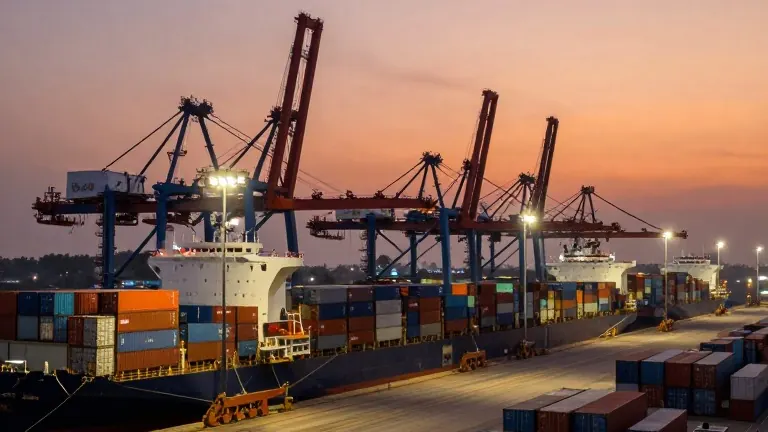
The ministry attributed the upward revision to accelerated growth in energy consumption, port traffic, goods and services tax collections, and car sales during the previous quarter. Officials noted that India’s momentum contrasts with global growth predictions hovering near 3 percent. The report described the domestic trajectory as holding firm compared to the rest of the world.
However, the assessment warned of rising inflationary threats. The ministry identified the El Nino weather phenomenon as a key risk to soil moisture ahead of the winter sowing season. External factors, including oil prices and instability in the Middle East, continue to pressure the rupee’s value. These conditions are driving up costs across various sectors.
Inflation data for September 2026 shows divergent trends across different price indices. The consumer price index rose 5.54 percent year-on-year. The wholesale price index increased more sharply by 11.39 percent. Food costs climbed 8 percent in rural areas and 7.18 percent in urban centers. Fuel and power prices saw the steepest jump, rising 25.85 percent compared to the same month a year prior.
The rupee has lost value against the US dollar for five consecutive years, with the decline accelerating over the last 15 months. The ministry stated that the currency’s slide remains manageable given the country’s current foreign exchange reserves. Officials put those reserves at approximately $721 billion, asserting that India is well-positioned to sustain its expansion.
The report did not provide a specific date for the next revision of these figures. It confirmed that the ministry will continue monitoring the impact of geopolitical conflicts on energy import costs. The primary focus remains on balancing growth targets with the need to contain the spread of high fuel prices into the wider economy.
Source: Deutsche Welle
More Business · Buyer Beware · Report a business · Got a Story?