NASA Revises Artemis Strategy to Confirm 2028 Lunar Landing
The agency moved the Orion docking phase to high-Earth orbit, a change requested by SpaceX to simplify the trajectory for the crewed mission.
By Harper Hassan ·
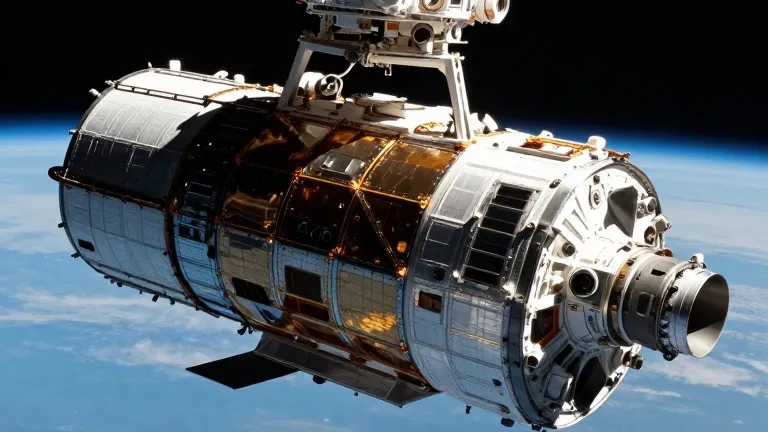
NASA has fixed the target date for the next crewed lunar landing at 2028.
The agency detailed its revised plan during a news conference on Friday, providing its most comprehensive public explanation of the Artemis Program to date. Officials confirmed that the mission architecture has shifted to address technical constraints and schedule pressures. The primary alteration involves the interaction between the Orion spacecraft and SpaceX’s Starship vehicle.
Under the new framework, Orion will dock with the Starship lunar lander in high-Earth orbit. The combined spacecraft will then depart for the Moon. Previously, the plan required the two vehicles to rendezvous in a near-rectilinear halo orbit around the Moon. SpaceX engineers requested this change during meetings with NASA in early 2026. They argued that the lunar orbit required more energy and presented other operational difficulties. The cancellation of the Lunar Gateway earlier this year removed the infrastructure that supported the original docking protocol, allowing NASA to adopt the simpler Earth-orbit approach without losing a key dependency.
Blue Origin’s contribution to the program follows a different trajectory. Its plan involves four launches of the New Glenn rocket. This architecture does not include the transfer of fuel or resources between separate spacecraft in space. The agency left open the possibility that the Blue Moon lander could meet Orion in low-lunar orbit, though this has not been finalized as the primary operational mode.
NASA officials stated that the agency still expects to fly the Artemis III mission by the summer of 2027. This flight will serve as a demonstration, testing the docking capabilities of both the Blue Moon and Starship vehicles near Earth. The Artemis IV mission, which includes the actual landing on the lunar surface, remains on schedule for 2028.
Administrator Jared Isaacman expressed confidence in the timeline during the briefing. He stated, "This is an achievable path we are on right now. We have the mandate, we have the resources, and the support from our stakeholders to be able to execute, and that's what we intend to do." Isaacman noted that agency leadership reviewed every element of the program to help partner companies speed up their work.
The revision simplifies the flight profile but leaves the core challenge of meeting the 2028 deadline intact. NASA’s ability to execute the plan depends on the continued progress of its commercial partners and the successful completion of the 2027 demonstration mission.
Source: Ars Technica