Overhead chargers keep Austin electric buses running for 22 hours
New terminals at Goodnight Ranch and Expo Center allow Rapid 800 and 837 buses to recharge mid-route, eliminating the need for long depot stops.
By Olga Kaur ·
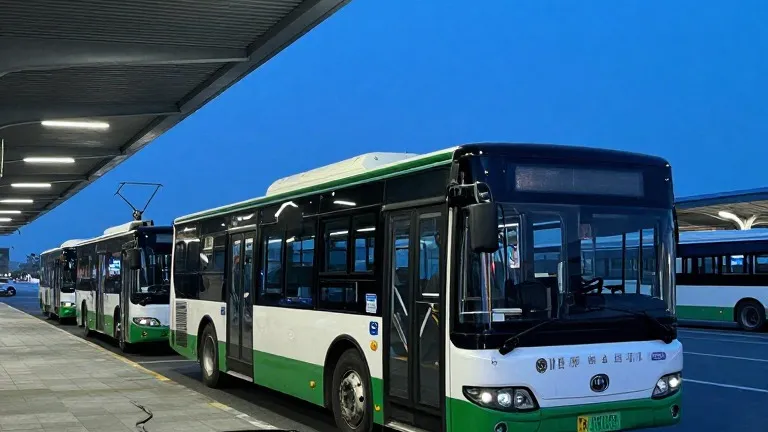
CapMetro electric buses on the Rapid 800 and Rapid 837 lines can now stay in service for up to 22 hours. This expansion of operating time is made possible by two new park-and-ride facilities equipped with overhead charging systems.
The Goodnight Ranch and Expo Center terminals opened this week after being announced in June. They serve as endpoints for the two electrified bus routes. Instead of returning to a central depot for a lengthy charge, buses drop their pantographs at these terminals to top up their batteries before heading back. This process allows the vehicles to maintain a 10 to 15 minute service schedule without range anxiety.
Andy Skabowski, CapMetro’s Chief Operations Officer and Executive VP, noted that traditional depot charging limits a bus to about eight hours of service. The on-route charging model removes that constraint. "Instead of a typical bus holding 8 hours of charging, on-route charging takes that out to 20 to 22 hours," Skabowski said. "Every time that pantograph drops, we charge that bus. That's what makes a commitment like (every) 10- to 15-minute service possible."
The charging infrastructure is built around a central hub at CapMetro’s main bus depot. Partner Camber Charging installed two 1,440 kW charging systems there. These units connect to 48 industrial dispensers, creating a total capacity of 2.9 MW. The system is designed to charge up to 48 electric buses simultaneously overnight. Camber Charging also provides preventive maintenance and remote diagnostics for the equipment across all three locations.
The buses operate on the Xcelsior battery-electric platform from New Flyer. The vehicles produce up to 320 all-electric horsepower. New Flyer states the platform can offer up to 660 kWh of available battery capacity. The design provides full torque at 0 rpm, a specification suited to the stop-and-go traffic patterns common in Austin.
The project integrates passenger amenities with the new charging infrastructure at the ends of the lines. The facilities were selected to support the growing fleet of electric buses serving the city. By moving charging away from the central depot and onto the routes, CapMetro aims to increase the daily availability of its electric vehicles.
Source: Electrek