Courts intervene as Trump administration tests voting rules on Election Day
Federal judges blocked a noncitizen voting plan and a California ballot segregation order while the Postal Service scrambled to process mail ballots on the day of the midterm election.
By Fatima Davis ·
A federal judge issued a temporary bar on Monday that stops the Trump administration from executing a plan designed to prevent noncitizen voting. The legal move comes on the eve of a midterm election where all 435 U.S. House seats and 35 Senate seats are on the ballot. Critics of the administration's approach argue that the plan risks disenfranchising eligible voters and infringes on the authority that states traditionally hold over their own election processes. The ruling adds a layer of judicial oversight to an election cycle already marked by disputes over voting mechanics and federal involvement.
In a separate legal action, a judge ordered the administration to stop demanding that California election officials segregate ballots cast by individuals appearing on lists of suspected noncitizens. This order follows a lawsuit filed by the administration in California and Alaska, both of which are considered battleground states in this cycle. The administration has continued to make claims about voting fraud, including the assertion that noncitizens vote in large numbers. These legal battles occur as Democrats express concern over potential interference and intimidation, particularly with the Justice Department threatening to prosecute local election officials.
The U.S. Postal Service has implemented specific measures to ensure that mail-in ballots are counted on time. The agency added hours, staff, and special lines to handle the volume of incoming mail. This logistical effort is critical in states where mail voting is a primary method of participation. The Postal Service's actions are part of a broader federal effort to manage the administrative side of the election, which includes coordinating with state officials to process the high volume of ballots expected on Election Day.
Republican committees have outraised and outspent Democratic committees in this cycle, a financial advantage driven partly by Trump-affiliated groups and support from Elon Musk. According to AP analysis of AdImpact data, 88.1 percent of Republican general election TV ad spending went to states and districts that Donald Trump won in 2024. This included more than 850 million dollars spent in areas where he won by ten points or more. At the candidate level, however, Democrats outraised their opponents, indicating a different dynamic in individual race funding.
The election is being described by the Associated Press as a referendum on the second term of President Trump. Voters are reported to be struggling with high prices and anger over an unpopular war with Iran. AP-NORC polling indicates that 35 percent of U.S. adults approve of the president's job performance, while only 25 percent approve of his handling of the economy. About seven in ten adults say the country is heading in the wrong direction. Most of those surveyed blame the president for the high cost of living, a central theme in Democratic campaigns across the nation.
More than 57 million people had already voted as of Monday, surpassing the early vote totals from four years ago in many closely watched states. Republicans are bracing for the possibility of losing the House while fighting to hold the Senate. The AP notes that one or two seats could tip the control of either chamber. Democrats are described as cautiously optimistic, with their campaigns focusing on the cost of living and oversight of the administration. The House Democratic Leader, Hakeem Jeffries, has outlined a 100-day agenda that prioritizes these issues if his party gains control.
Redistricting has played a significant role in the current electoral landscape. Six states are using new congressional maps following mid-decade redistricting efforts. These states include California, Florida, Missouri, North Carolina, Tennessee, and Texas. Ohio is also using a new map. Republicans attempted to use these new districts to beat the historical midterm pattern, where a president's party almost always loses seats. However, Democrats argue that the new districts in Florida and other states may not vote as originally drawn, creating uncertainty in the final tallies.
The Senate races include 13 battleground contests that could determine control of the chamber. Democrats need a net gain of four seats to achieve a majority, while Republicans can afford to lose only two. Key races are taking place in states such as Alaska, Florida, Georgia, Iowa, Kansas, Maine, Michigan, Montana, Nebraska, New Hampshire, North Carolina, Ohio, and Texas. In Alaska, the Trump administration filed a lawsuit related to the certification of the Senate result, adding another legal front to the election. In Maine, economic strain and tariffs have made the state competitive, according to the AP.
Governor races are also closely watched, with 36 governorships on the ballot. Republicans hold 26 of these offices, while Democrats hold 24. Democrats would need a net gain of two governorships to achieve a nationwide majority, a position they have not held since 2010. The AP identifies Texas, Florida, and Iowa as competitive governor races. In Georgia, a Republican health care executive is running against a former Atlanta mayor. In Ohio, a Republican candidate is facing a Democrat in a race that has seen some controversy over campaign advertisements.
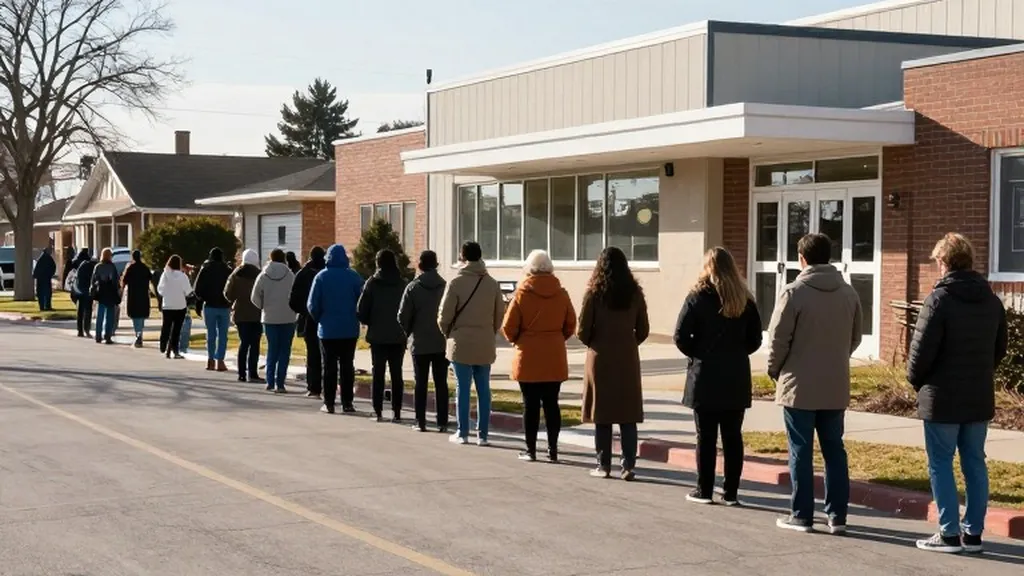
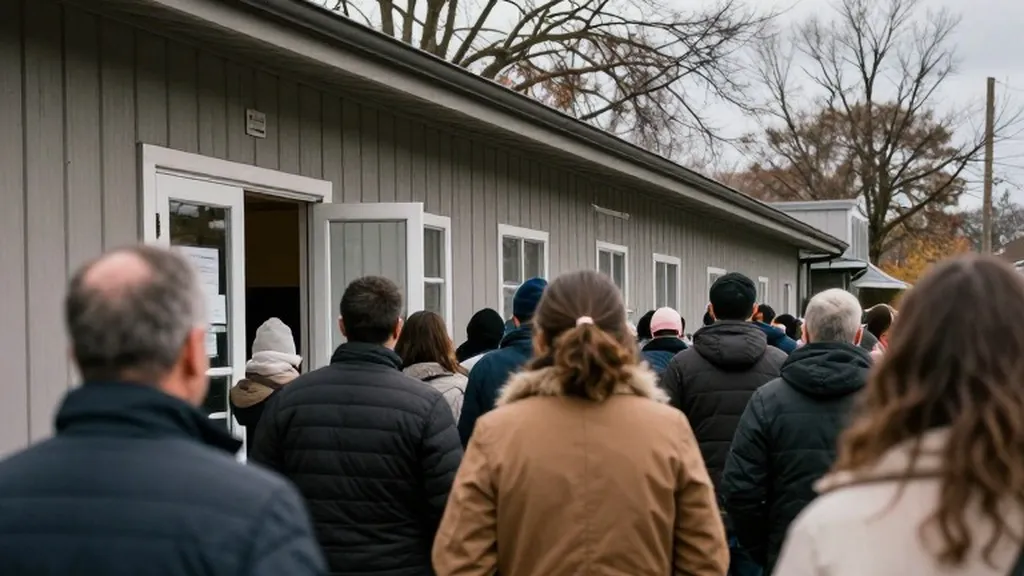
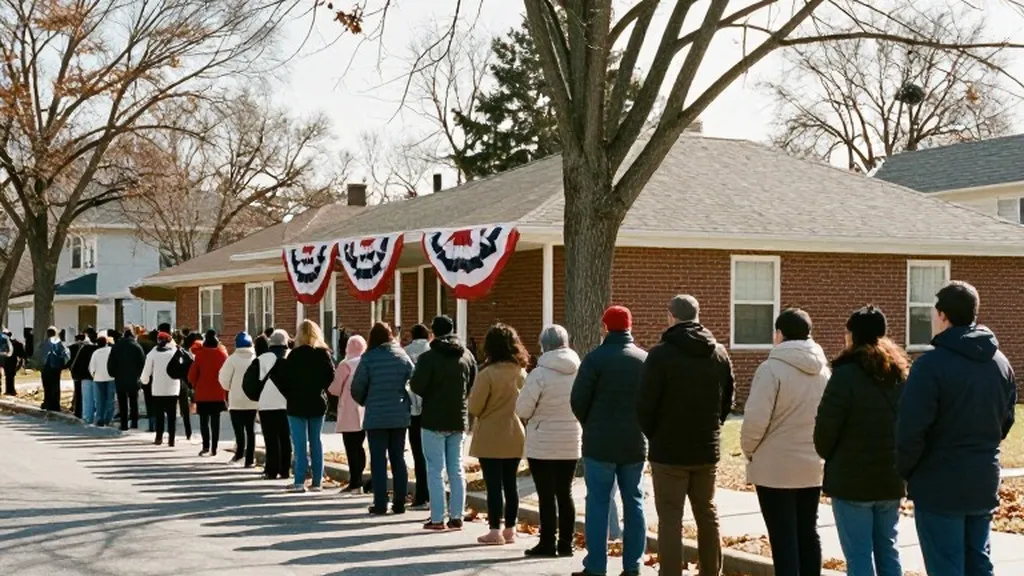
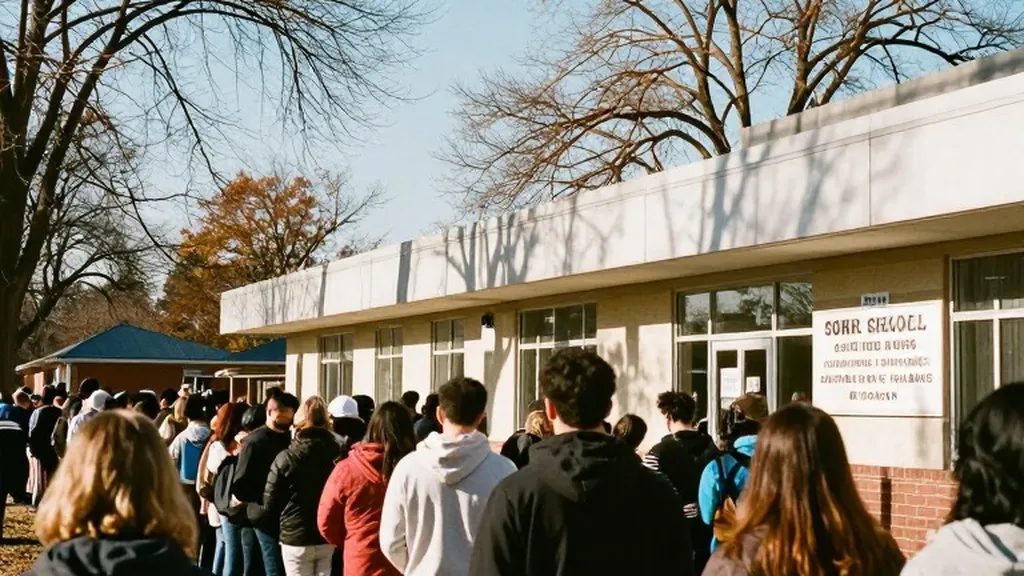
Voters are heading to the polls on Tuesday, November 3, 2026, with various issues weighing on their minds. The cost of living, health care costs, and the conduct of the Iran war are prominent topics. Voter James Moore, a librarian in Raleigh, North Carolina, stated that he is paying more for taxes, healthcare, and everything else. Voter Mark Barker of Palm Beach Gardens, Florida, expressed support for the president's performance. These individual perspectives reflect the broader national mood as the country prepares to decide the balance of power in Congress.
The election results will also have implications beyond Washington. Wall Street is watching the outcome closely, as Reuters notes that results could add to investor concerns about artificial intelligence spending and debt ceiling negotiations. The political stability suggested by the election results may influence market confidence. As polls close across the country, the focus shifts to the counting of votes and the resolution of any remaining legal challenges that could affect the final certification of results in various jurisdictions.