Trump rallies across U.S. as midterm vote hinges on economic anxiety
With approval at 35%, the President urges Republicans to treat him as a candidate while Democrats focus on cost of living and oversight.
By Harper Hassan ·
As polls open across the nation on Election Day, the political landscape is defined by a sharp divergence between the President's active campaign and the strategic distance many of his Republican allies maintain. President Donald Trump has held dozens of rallies in the final days of the campaign, a level of activity that underscores his desire to influence the outcome of the midterm elections despite not being on the ballot. His final rally took place in Salina, Kansas, where he explicitly asked voters to engage in a specific mental exercise regarding his presence in the race.
At that event, Trump told the crowd, "I really want you to pretend I'm on the ballot." This request highlights the central dynamic of the 2026 midterms, where the President’s popularity, or lack thereof, serves as the primary lens through which voters evaluate congressional candidates. The Associated Press describes the election as a referendum on Trump's second term, with many voters feeling the weight of high prices and an unpopular war with Iran. This sentiment is reflected in recent polling data that shows a significant portion of the electorate is struggling with the cost of living.
According to AP-NORC polling, only 35% of U.S. adults currently approve of Trump's job performance, while 25% approve of his handling of the economy. The data indicates that about 7 in 10 Americans believe the country is heading in the wrong direction, with most blaming the President for high prices. These numbers present a challenging backdrop for Republican candidates who are seeking re-election in districts that voted for Trump in 2024. Many of these candidates have kept a visible distance from the President in recent weeks, likely aware that his low approval ratings could drag down their own prospects if they are too closely associated with him.
Democratic figures, however, are using these statistics to frame the election as a choice for change. DCCC Chair Rep. Suzan DelBene stated, "The American people are angry. They want change." This message resonates with voters like James Moore, a 57-year-old librarian in Raleigh, North Carolina, who cited rising costs in his daily life. Moore noted, "I'm paying more taxes. I'm paying more for my healthcare. I'm paying more for everything." For Democrats, the focus remains on the cost of living, health care, and the need for oversight of the administration, particularly regarding the ongoing conflict with Iran.
The stakes for control of Congress are high, with all 435 House seats and 35 Senate seats up for grabs. Democrats need a net gain of three districts in the House to secure a majority, while Republicans can afford to lose no more than two. In the Senate, Democrats require a net gain of four seats to take control, a threshold that appears difficult given the current partisan composition. Ballotpedia counts 46 battleground districts in the House, with 25 currently held by Democrats and 21 by Republicans. The complexity of the map is further complicated by new congressional boundaries in six states, including California, Florida, and Texas, which may not vote exactly as redistricting maps suggested.
Republican strategists remain focused on turnout as the primary variable that could save their majority. RNC Chairman Joe Gruters emphasized, "Everything depends on turnout. If we turn out our voters, we win, and that's what we've been planning for." The party is bracing for the possibility of losing the House while fighting hard to retain the Senate. The financial resources behind the Republican effort are substantial, with committees outraising and outspending their Democratic counterparts. This advantage has been bolstered by Trump-affiliated groups and significant contributions from Elon Musk, who has played a prominent role in funding Republican campaigns.
However, the distribution of that money has been uneven. An AP analysis of AdImpact data reveals that 88.1% of Republican general election TV ad spending went to states and districts Trump won in 2024. This includes more than $850 million spent in areas where he won by 10 points or more, a strategy that aims to solidify safe seats rather than compete in marginal races. In contrast, Democratic committees have focused their limited resources on competitive districts, often relying on lower-cost digital advertising and ground game efforts to make up for the disparity in television spending. This financial edge for Republicans is a key obstacle for Democrats, who must overcome it with higher voter turnout in the battleground states.
Complicating the election administration is the continued presence of false fraud claims made by the President. Trump has asserted that noncitizens vote in large numbers, a narrative that has fueled legal battles in states like Alaska and California. A federal judge temporarily barred the Trump administration from carrying out a plan to prevent noncitizen voting, a move that critics say risks disenfranchising eligible voters. Additionally, a judge ordered the administration to stop demanding that California election officials segregate ballots cast by people on lists of suspected noncitizens. These legal maneuvers have led to fears among Democrats of interference and intimidation, particularly as the Justice Department threatens to prosecute local election officials.
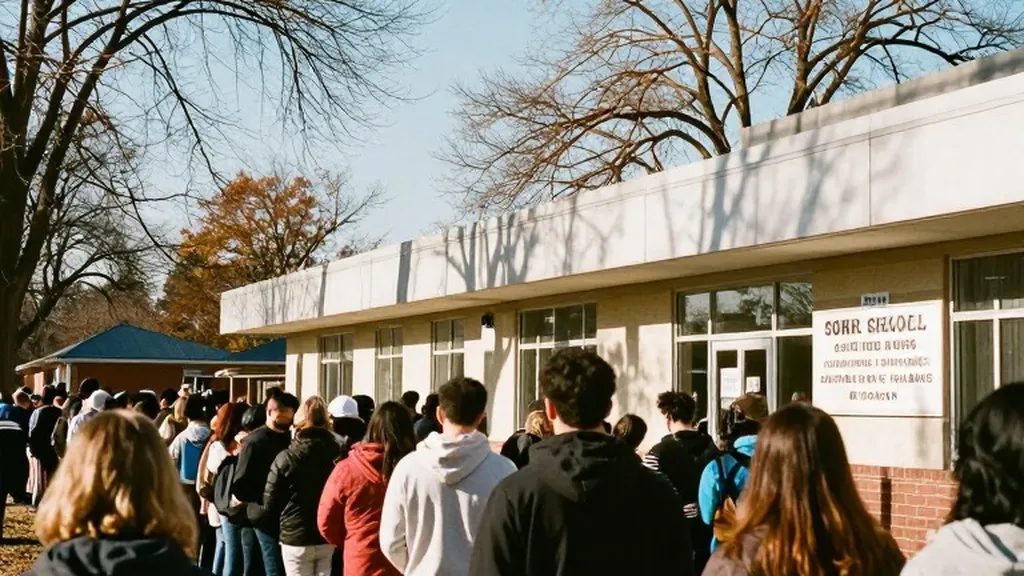
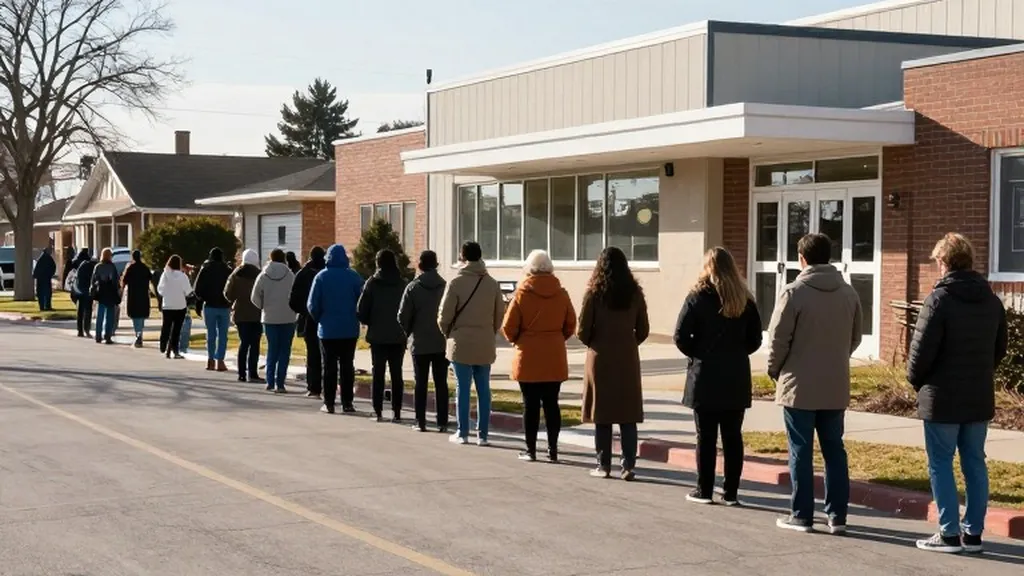
The mood in polling places is marked by a mix of anxiety and hope. More than 57 million people had already voted as of Monday, surpassing the early vote totals from four years ago in many closely watched states. This high level of early participation suggests that voters are motivated to make their voices heard on the key issues of the day. In Salina, Kansas, the site of Trump's final rally, the atmosphere was one of intense partisan engagement. The President's presence in a reliably Republican state, where he won by more than 13 points in 2024, signals his belief that the party's base remains energized despite the economic headwinds.