
Ebola in Kenya: Second Death Confirmed in Nation's First Outbreak
A 65-year-old woman died in quarantine, bringing the national toll to two while health officials monitor seven other patients in isolation.
By Harper Hassan ·
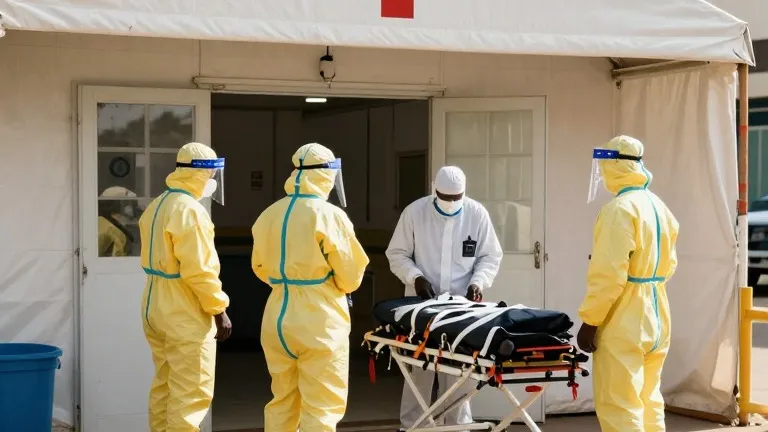
Kenya recorded its second death from Ebola on Friday, a grim marker in the country's first-ever outbreak of the virus. The health ministry confirmed that a 65-year-old woman passed away after developing symptoms on October 13 while already under quarantine.
The patient was a close relative of the first confirmed victim, a man who died on October 5. That initial patient had fallen ill in September and received treatment in the Democratic Republic of Congo before flying to Nairobi, where he died shortly after arrival. The ministry states that all current cases stem from a single cluster linked to that man, with no evidence of wider community transmission yet.
Seven additional individuals are currently receiving care at two isolation facilities. This group includes three other relatives of the first victim, three health workers, and one hospital cleaner. Officials emphasized that the containment of these specific cases remains the primary focus of the national response.
The strain identified in Kenya is the Bundibugyo species, a variant that lacks an approved vaccine or standard treatment. Trials are currently underway to address this gap. The virus spreads through contact with infected bodily fluids, such as blood or vomit. As the disease progresses, it can cause severe vomiting and diarrhea, potentially leading to organ failure. While not all patients experience it, some develop internal and external bleeding.
Kenya's outbreak follows a devastating crisis in the Democratic Republic of Congo. Since the virus was confirmed in that country in May, more than 4,000 people have died, making it the second most deadly Ebola outbreak on record. DR Congo has reported over 9,500 cases. The International Rescue Committee, which is assisting both governments, notes that Kenya faces a steady risk of new cases crossing its borders.
To mitigate this risk, Kenya has enhanced screening for travelers arriving from DR Congo and nine other high-risk nations, including Uganda, Tanzania, and South Sudan. Passengers must complete a digital surveillance form before boarding and present a QR code to port health officials upon landing. Aircraft from these countries are also subject to additional public health checks. Within the country, the government is urging residents to report suspected cases promptly.
Source: BBC News