Taiz Water Prices Jump 75 Percent Amid Houthi Siege
Aid workers report that families in Yemen's third-largest city are stretching ten liters of water over four days as supply routes collapse.
By Harper Hassan ·
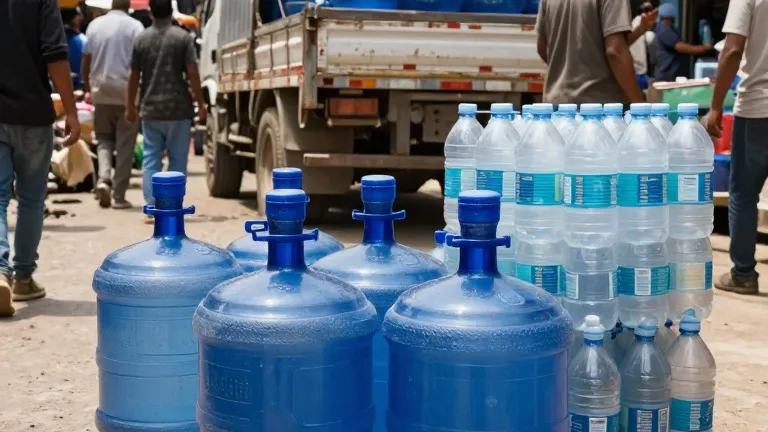
Drinking water costs in Taiz, Yemen, have risen by as much as 75 percent in recent weeks, according to local residents and aid groups. The price surge coincides with a tightened siege by Iran-backed Houthi forces that have surrounded the country's third-largest city. Humanitarian organizations state that the basic needs of Taiz's more than one million residents are now barely being met.
The shortage has forced households to drastically reduce consumption. Hadil al-Shahid, who lives with two young children, said her family once used approximately 10 liters of bottled water daily for drinking and cooking. They now stretch that same volume to last about four days. "We stopped drinking coffee and tea, which we used to drink daily," she said. Some families have begun purchasing water on credit as cash runs low.
The siege has disrupted multiple supply chains simultaneously. Water trucks are largely blocked from entering the city, and the water utility operates below capacity due to fuel shortages. Desalination plants also lack the fuel needed to process seawater. Truckers who still make the dangerous route into Taiz have tripled their delivery rates in some cases.
The crisis is compounded by a population surge. Taiz province has absorbed an estimated 124,000 displaced people since August, according to United Nations migration experts. This influx represents roughly half of the total displaced population from elsewhere in Yemen. Jens Laerke, a spokesperson for a UN emergency aid division, noted that some families survive on one meal a day in makeshift shelters.
Food and fuel prices have also climbed sharply. Flour and rice cost about 50 percent more than they did in the summer. Cooking gas prices have more than quadrupled, according to Hani Bafaqih of the aid group CARE. Families are turning to wood, charcoal, or cardboard for heat, while community kitchens face fuel shortages that hinder operations.
Public health risks are rising as sanitation services struggle to function. Waste collection has shut down in parts of the city due to fuel scarcity. Laerke warned that disease, including cholera, becomes more likely when thirsty families use unprotected wells. Amnesty International has urged Houthi leaders to open roads into the city immediately, describing the situation as being on the brink of a severe humanitarian disaster.
The military conflict continues to shape daily life in the city. Houthi missiles hit a residential area earlier this week, killing two teenage girls. Ahmed Abdel Gaber, a displaced resident living in the ruins of a building, said he hears explosions daily from fighting located about five kilometers away. The government still holds the center of Taiz, but analysts note that controlling the city is a strategic priority for rebels seeking to push south toward Aden and Lahj.
Source: NPR