Baltimore County voters face $392 million debt and leadership shakeup
Residents decide on a new county executive, an expanded council, and major infrastructure spending in Tuesday's election.
By Harper Hassan ·
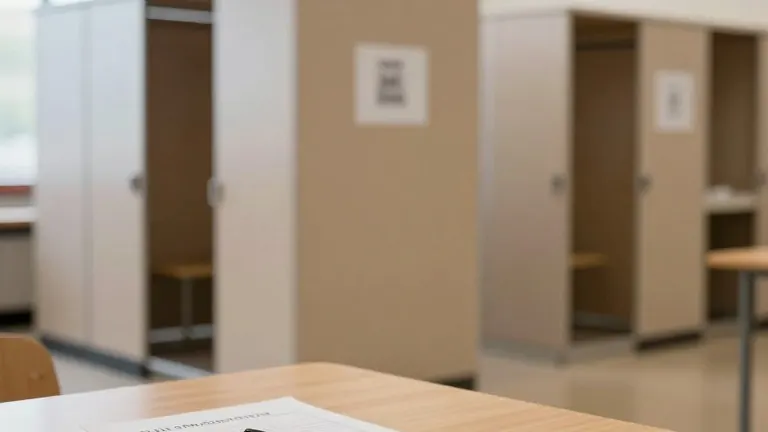
Baltimore County voters cast ballots on Tuesday to determine the future of their local government and approve nearly half a billion dollars in public debt.
The election features a competitive race for county executive, a historic expansion of the County Council, and 14 distinct ballot measures. The bond questions alone authorize $391.75 million in borrowing. This sum funds school construction, public buildings, and road infrastructure. School projects account for the largest share, with Question J allowing $200 million in spending.
Two candidates compete for the top county job. Democratic Councilman Julian Jones faces Republican businessman Patrick Dyer. Jones would become the county's first Black county executive if he wins. Dyer campaigned on making Towson safer. Both candidates seek to succeed County Executive Kathy Klausmeier. The race also includes a new State's Attorney, Sarah David, who is unopposed after defeating Scott Shellenberger in the primary. David will be the first new top prosecutor in the county in 20 years.
The County Council grows from seven to nine members. At least six of the new seats are expected to go to first-time officials. Advocates support the change because the current seven-member body is entirely male. The expansion aims to increase diversity in the legislative branch. Voters will also select a sheriff, school board members, and state legislators.
Question C addresses the selection of the county inspector general. Currently, the county executive nominates the official, and the council confirms the choice. The proposal would transfer this power to a seven-member board. It also requires the inspector general to live in the Baltimore-Columbia-Towson metropolitan area. The measure follows a 2025 dispute where the council rejected a nominee who lived in Fredericksburg, Virginia. The county has lacked an inspector general since January. Councilman Izzy Patoka proposed the change to remove politics from the selection process. The council voted unanimously to place the question on the ballot.
Questions A and B target land use and agriculture. Question A requires a supermajority of six votes to move the Urban-Rural Demarcation Line. Previously, a simple majority was enough. Councilman David Marks proposed the measure, which passed the council 5-2. Councilman Jones voted against it, arguing that residents inside the line subsidize rural areas. Council Chairman Mike Ertel told WYPR that it is good for the public to reexamine what the URDL is all about. Question B would create a separate Department of Agriculture. County officials estimate the new department would cost $500,000 annually to start. They argue the function is already handled by the Department of Economic Development. Maryland Agriculture Secretary Kevin Atticks supports the creation of the new department.
Polls are open from 7 a.m. to 8 p.m. on Tuesday, Nov. 3. Nearly 79,000 county residents voted early. Mail-in ballots must be postmarked by 8 p.m. or placed in a drop box by the deadline. The results will determine who leads the county and how much money local taxpayers will owe for new infrastructure.
Source: Baltimore Chronicle