Baltimore Rabbi Emily Stern's Kol HaLev Synagogue Invites Congregants to Lead Services
The congregation's model of active participation aims to combat isolation by treating prayer as a shared, conversational experience rather than a passive lecture.
By Harper Hassan ·
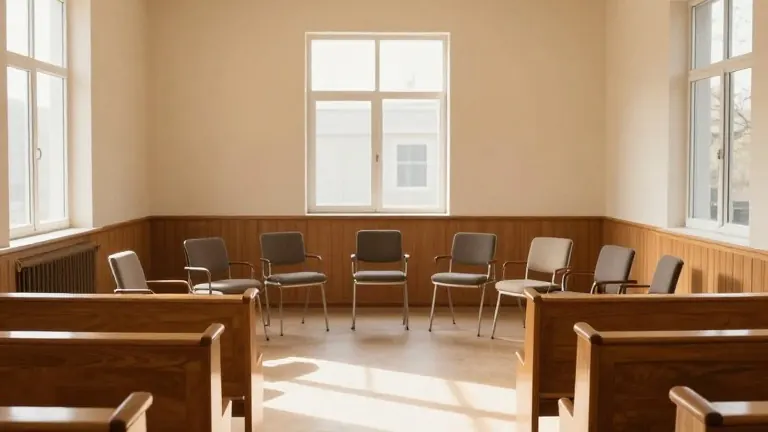
At Kol HaLev in Baltimore, members do not sit in silence during Shabbat services. Instead, they are invited to speak, share personal updates, and participate directly in the religious ritual. Executive director Alan Silver stated that this open format appeals to people who prefer an interactive community over a traditional, one-way service.
Silver noted that new attendees often describe the experience as refreshing. He reported that visitors frequently say they are not looking for a session where the rabbi delivers a monologue. "Lord knows what's going to happen in our service, and people like it," Silver said. The synagogue uses this method to foster a sense of belonging among its members.
Rabbi Emily Stern facilitates these interactions during the morning blessings of gratitude. She prompts the congregation to repeat prayers and then asks individuals to articulate specifically what they are thankful for. Stern observed that participants often share vulnerable details about their lives during these moments.
"A lot of the time, our community will really share [things like] 'this week I'm getting a surgery, and I'm really nervous, but I'm grateful I have you guys,'" Stern said. She added that people go deep in their responses, which reinforces the feeling that the group is a true community.
The leadership team identified a widespread epidemic of loneliness as a primary driver for this approach. Stern serves not only as a rabbi but also as a mashpia, a Jewish spiritual connector. Silver explained that this role is central to the synagogue's function. "The way to deal with loneliness is social connection. The social connection is made possible because of the environment that the [mashpia] created," Silver said.
Silver distinguished Stern's approach from that of other religious leaders. He noted that while there are many rabbis, Stern’s background in active listening allows her to create a space where people feel comfortable expressing themselves. Stern views listening as an active privilege rather than a passive act. "It's not that we only share, we see listening as an active experience and privilege," she said.
This focus on listening allows Stern to tailor her rabbinic guidance to each individual's spiritual journey. She aims to make Judaism relevant to where each person stands in life. "It's about people's individual spiritual journeys and meeting people where they are in their journey, and making Judaism relevant to their journey," Stern said. She encourages members to ask how religious concepts infiltrate and nurture their daily lives.
Kol HaLev holds weekly Shabbat services on Fridays and Saturdays. Stern said that attending these services provides a clear view of the synagogue's unique outlook on participation. "Our services are always different," she stated. The varying nature of the gatherings ensures that no two sessions are identical.
Stern believes that knowing the details of congregants' lives strengthens the entire community. "The more I know about what's going on in someone's life, [the better our synagogue functions], and I think the whole community feels that way," she said. This bond creates a tighter social network among members.
Silver said Stern sets the emotional tone for the synagogue, which is essential for the system to function effectively. He has served on other synagogue boards and worked with various rabbis. "Here, if something either very positive or very negative happens to a congregant, I can tell it from the rabbi's voice," Silver said. He added that if something bad happens, he can tell over the phone that there are tears in her eyes, indicating her deep investment in the community.
Nearly 20 years after its founding, Kol HaLev continues to attract members through its focus on personal connection. Silver described the current state of the synagogue as lovely. The congregation maintains its unique system by prioritizing active participation and individual spiritual growth in every service.
Source: Baltimore Jewish Times