East Hampton Prepares For 200 New Cell Poles
Town planners visit newly installed sites in East Hampton as local residents question the placement and visibility of the brown metal structures.
By Harper Hassan ·
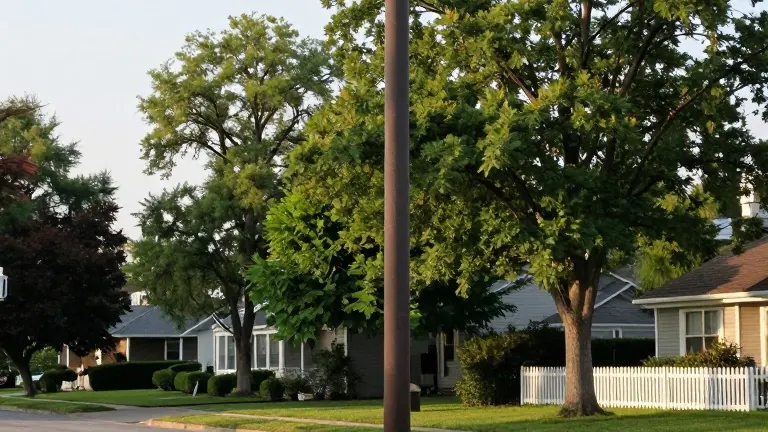
East Hampton Town expects to install approximately 200 small cell wireless poles over the next year. Tina Vavilis LaGarenne, the town’s planning director, spent last week visiting several of these sites to address resident concerns. The poles measure 38 feet tall and are designed to improve wireless coverage in areas with service gaps.
The first stop was 23 Montauk Avenue in East Hampton. A 40-foot brown tower sits at the foot of Albert Intreglia’s lawn. Intreglia expressed frustration to the group, stating that the placement was absurd and that he was deeply offended. Darryl Forster, a senior external affairs manager at Arium Networks, the company installing the poles, said he would review the coverage maps to see if adjustments were possible. He noted that the tower would not be activated until the end of the year.
Forster told the group that the tower serves both coverage and capacity needs. He explained that physical constraints often limit how far a pole can be moved. He added that the company usually cannot shift these structures by more than a few feet. Charlotte Yerkovich, a neighbor across the street, countered that she wanted the tower moved 700 feet away.
The team then visited 42 West Gate Road in Wainscott. A hand-drawn poster attached to a no parking sign requested that the tower be placed north of the sign rather than in front of the house. The planning director explained that existing utility poles across the street were not suitable because they carried primary electrical wires. Federal regulations prohibit small cell poles from being within 15 feet of such lines. The homeowner, reached by phone, cited aesthetic concerns as his primary objection.
Vavilis LaGarenne noted that the town has only 10 days to review applications for new towers. She explained that while the town has a permitting process, the federal government maintains much of the jurisdiction over these installations. This limits the local authority to reject or significantly alter proposed sites. The group also visited 123 Sayre's Path, where residents raised general concerns about the visibility of the tower's base.
Marla Behrman, a pedestrian on Wainscott Stone Road, asked who had authorized the new pole. Vavilis LaGarenne explained that the town follows a specific permitting process to ensure federal regulations are met. Behrman, a resident of Sayre's Path, initially described the pole as a monstrosity but later softened her tone. She acknowledged that the brown color helps it blend into the surroundings. She walked away toward the next small cell tower on the street.
The installation of these poles follows a trend across the region. Arium Networks is responsible for the infrastructure in East Hampton. The brown color of the towers is intended to make them less visible from a distance. The town's planning department continues to monitor the sites to ensure compliance with local and federal standards.
Source: East Hampton Star