Serbia Vote: 500,000 Voter Records Missing Addresses
An audit of Serbia's voter registry found roughly half a million records lacking complete street details ahead of the October 25 ballot.
By Olga Kaur ·
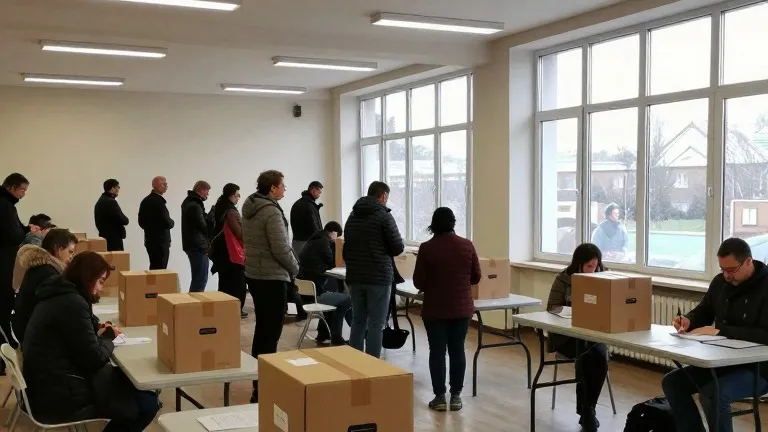
Roughly 500,000 people registered to vote in Serbia lack a complete home address, an audit by RFE/RL's Balkan Service found ahead of the October 25 parliamentary vote. The records are missing street names or house numbers, and hundreds list public facilities such as social welfare centers as their residence.
The contest places Aleksandar Vucic's ruling party against an opposition movement born from student protests. Vucic, who has dominated Serbian politics for fourteen years, resigned as president in late September to avoid seeking a third term. He now aims for prime minister, a post he held from 2014 to 2017. The ballot falls two days before the second anniversary of a canopy collapse at Novi Sad's railway station that killed 16 people on November 1, 2024.
The canopy failure at the Chinese-backed project sparked nationwide protests over corruption allegations. Police responded with force and arrests. On March 15, 2025, authorities allegedly used a sonic weapon against peaceful demonstrators. After a student protest in June, Vucic announced his resignation and set early elections for October 25.
Vladimir Bilcik, a former European Parliament rapporteur for Serbia, called the vote the first in over a decade with a genuinely uncertain outcome. Polling shows the electorate split between the ruling coalition and the student movement. The opposition list features nonpartisan figures including university professors, led by cardiologist Ilija Srdanovic, though the movement says his placement does not guarantee the premiership.
The Serbian government says it adopted all OSCE recommendations from the 2023 election review. An interim OSCE report, issued after deploying 300 observers, contradicted that claim. RFE/RL's audit found voter counts in Bosnia and Kosovo rose before the vote, and four employees at Serbia-funded institutions in Kosovo told RFE/RL they faced pressure to back the ruling party.
A statement from the US Senate Foreign Relations Committee on October 21 cited reports of illegal monitoring of opposition members. The Serbian nonprofit SHARE and University of Toronto researchers documented at least 16 cases of Pegasus surveillance software used in 2026; the program is illegal in Serbia. Government officials deny targeting political rivals.
No new EU accession chapter has opened since late 2021. Vucic has pledged to keep Serbia out of EU-backed sanctions on Russia over its invasion of Ukraine. The student movement opposes those sanctions as well and backs Belgrade's refusal to recognize Kosovo's independence.
Source: RFE/RL