Apple's $399 iPod launch marked a 25-year shift in personal storage
Steve Jobs introduced the 5GB device on October 23, 2001, pricing a full music library at a cost that defined the era.
By Olga Kaur ·
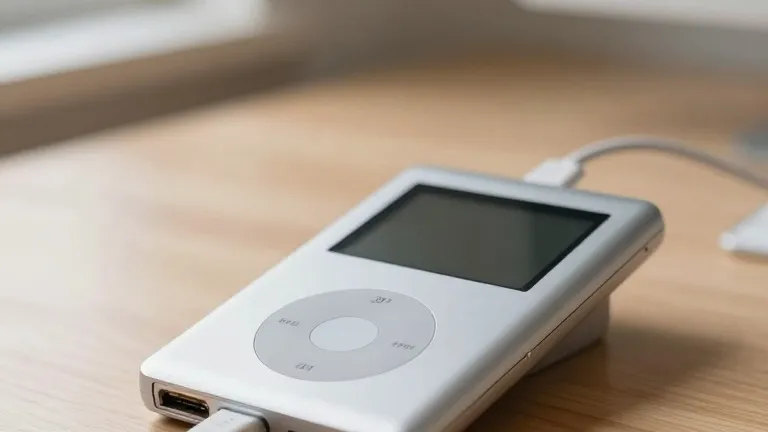
Apple charged consumers $399 for five gigabytes of storage when Steve Jobs unveiled the first iPod on October 23, 2001. The price point placed a complete personal music library in a pocket-sized form factor, a concept that reshaped how Americans accessed digital audio. The launch marked a specific moment in the company's financial recovery, occurring shortly after the dot-com bubble burst and while Mac OS X sales were stabilizing.
The decision to enter the portable music market was strategic rather than accidental. Jobs identified music as a universal interest with no dominant market leader. He noted that competitors like Sony, Creative, and Sonic Blue offered devices, but none had solved the core usability issues of digital playback. The market at the time split into four categories: standard CD players, MP3 CD players, flash-based players, and hard-disk jukeboxes. Jobs selected the hard-disk format as the primary vehicle for Apple's entry.
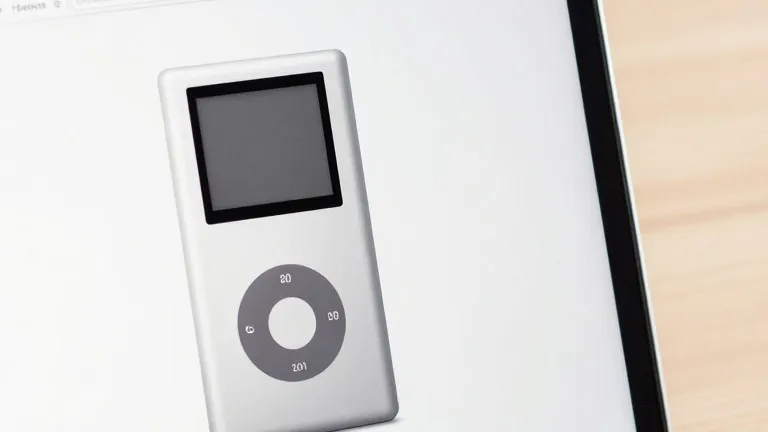
The device promised CD-quality sound for MP3, WAV, and AIFF files. The 5GB drive capacity stored approximately 1,000 pop songs encoded at 160Kbps. Jobs stated that for most users, this amount represented their entire personal collection. The hardware relied on a new 1.8-inch Toshiba hard drive that was 0.2 inches thick. This component allowed the player to measure 2.4 by 4 by 0.78 inches and weigh 6.5 ounces, making it lighter than many cell phones available at the time.
Speed was a central feature of the presentation. The iPod used a FireWire 400 connection for both charging and data transfer. Jobs claimed this connection moved a full CD onto the player in five to 10 seconds. By comparison, standard USB connections of that era required roughly five minutes for the same task. Transferring 1,000 songs took about 10 minutes via FireWire, a process that took five hours over USB. The lithium-polymer battery provided 10 hours of continuous playback and reached 80% charge in one hour.
Design focused on single-handed operation. The interface included an accelerated scroll wheel with a piezoelectric clicker that provided tactile feedback. Users could browse by playlist, artist, or song title. During the stage demonstration, the first track played was Sarah McLachlan's "Building a Mystery." The device featured a minimal back and sides, which Jobs described as durable and easy to use.
Software integration launched simultaneously with the hardware. iTunes 2 debuted on the same day, introducing MP3 CD burning and synchronization features. The Auto-Sync function automatically matched the user's Mac library to the iPod upon connection. The player also functioned as a FireWire hard drive for file storage.
The product line endured for more than two decades. The first iPhone arrived in early 2007, introducing a convergence of phone and music player that eventually made the dedicated iPod redundant. Apple released the seventh-generation iPod Touch in May 2019 as the final model. The company stopped maintaining the line until it officially discontinued the product in May 2022.
The 25th anniversary of the launch highlights the specific economics of 2001. The $399 price tag represented a premium cost for 5GB of storage. That price point established a benchmark for portable digital storage that persisted until flash memory costs dropped significantly in the following years.
Source: Tom's Hardware