London Dining Hubs Expand Into Gulf
Major British food venues are opening locations in the Middle East while citing high domestic taxes as a primary driver.
By Harper Hassan ·
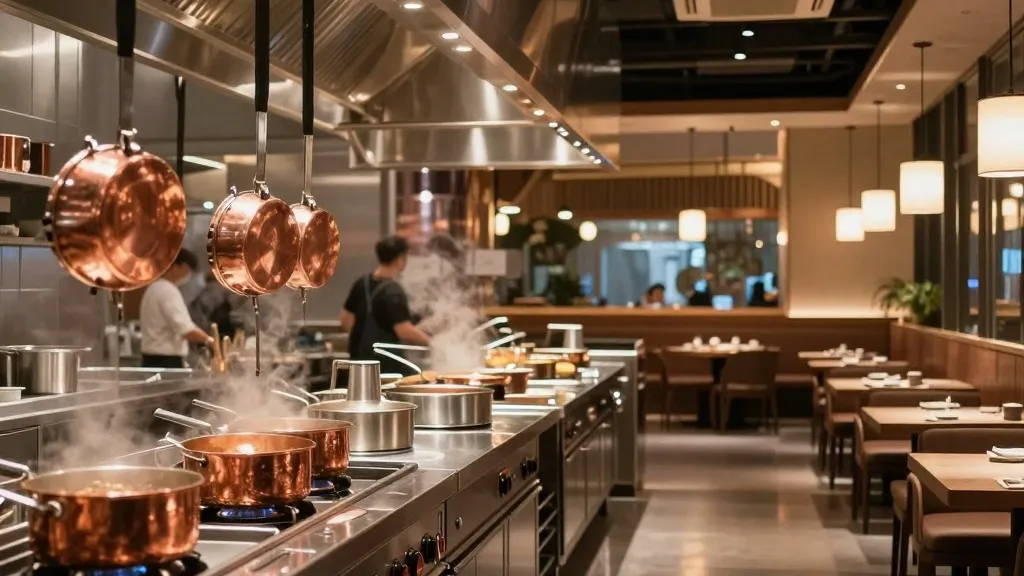
High-profile dining establishments in London are rapidly establishing branches in the Middle East, a move one co-owner attributes to a surge in domestic taxes and a more favorable business climate abroad. James Robson, who shares ownership of Fallow in St James's Market, recently finalized an agreement to open a new location in the region. His venue, which serves roughly 1,000 customers daily, gained significant national attention through social media platforms and distinctive menu items, such as a whole cod head served with a spicy butter sauce.
Fallow joins a growing list of prominent British brands making the same expansion. Scott's of Mayfair, a well-known spot for celebrities, has already opened in Dubai. The city also welcomed Gymkhana, an Indian restaurant with two Michelin stars, and Park Chinois, an upscale Chinese dining room. Bread Ahead, a bakery associated with Borough Market, has also expanded there, while Isabel's, a long-standing Mayfair venue favored by politicians, launched a location in Abu Dhabi.
These developments are occurring despite recent regional instability. The US-Israeli conflict with Iran earlier this year subjected Dubai to bombardment and triggered a wave of expatriate departures. Some dining spots are still recovering from that disruption. Dinner by Heston has remained temporarily closed since the conflict ended. Additionally, the Michelin guide faced criticism earlier this month for listing 16 establishments that were shut down, a decision attributed to inspections conducted before the war began.
Robson, currently in Hong Kong exploring Asian markets, identified East Asia, the United States, and the Gulf as primary areas for growth. He noted that America supports business, the Gulf actively encourages it, and East Asia offers a work ethic and tax system that he believes outperforms the UK. A central point of contention is hospitality VAT. The UK rate stands at 20%, which is among the highest in Europe, where the average for restaurants is approximately 12%. Italy, for instance, charges 10% on restaurant food.
Chefs are urging Chancellor Andy Burnham to reduce this rate in next week's budget. Robson described the recent budgets as leading the country into multiple anti-growth taxes and anticipates further measures. He specifically highlighted the 25% corporation tax and dividend taxes of 40% or more, calling for VAT to align more closely with European standards. Jason Atherton, a Michelin-starred chef who spends a third of his time at his Dubai restaurant, stated that generating profit is simpler there than in London. Robson expressed pride in contributing to the UK deficit but argued that domestic growth no longer provides a logical balance of risk and reward, prompting him to secure his position at home while focusing on overseas opportunities.
Human rights advocates have raised concerns about this expansion. Felix Jakens, director of campaigns at Amnesty International UK, pointed out that the UAE has a poor track record on workers' rights and protection from labor exploitation. He warned that the UAE's significant investment in its UK image, including through Manchester City, should not obscure how workers are treated. Jakens noted that migrant workers, who form the majority of the population, remain tied to a sponsorship system that binds them to their employers and limits their ability to form trade unions. He urged any UK business expanding into the Gulf to conduct thorough human rights due diligence to ensure kitchen staff are treated fairly, compensated properly, and can raise concerns without fear of losing their jobs or visas.
Source: The Guardian
More Business · World news · Buyer Beware · Report a business · Got a Story?