M-Vave opens FM-1 synth code after users hacked the device
The company released an SDK and open-source application layer following community reverse engineering that began in July.
By Olga Kaur ·
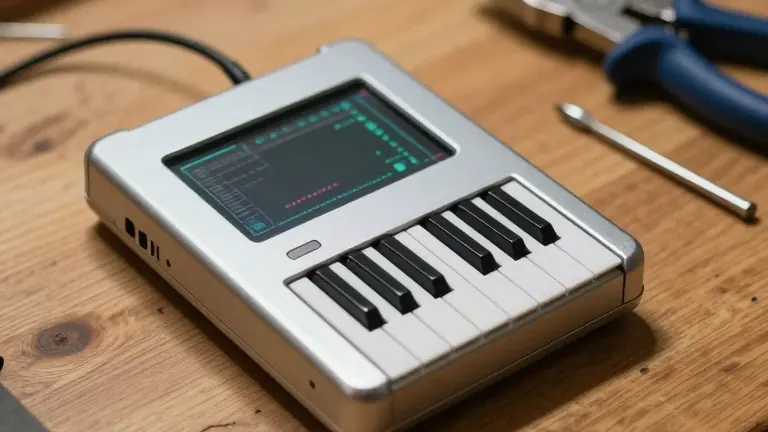
59.72 dollars is the price tag on the M-Vave FM-1. The frequency-modulation synthesizer launched as a budget alternative to the classic Yamaha DX7. It initially shipped with limited functionality and a closed system. That changed in July when hobbyists started dissecting the device's software.
Users on the r/synthdiy subreddit began reverse-engineering the stock firmware. By September, custom versions were circulating online. As of late October, the number of community projects available for the device has grown rapidly. M-Vave responded to this grassroots activity by releasing its own tools for developers.
On October 17, the company announced FM1 Open. This software package allows owners to build and install custom firmware. The release includes a software development kit and a browser-based workbench. It also provides version 15 of the stock firmware, which now serves as an open platform for building new applications.
The hardware features 27 physical piano keys and a 1.54-inch TFT display. These components support a wide range of projects beyond standard music production. The open application layer lets users modify how the device behaves. M-Vave published the source code under the GPLv3 license.
The company also included an in-browser emulator. This tool lets developers test their code before flashing it onto actual hardware. This approach differs from typical industry responses to unofficial modifications. Usually, manufacturers release a patch to lock down a system after users find workarounds. M-Vave chose to support the community efforts instead.
There is one limitation to the openness. The underlying synth engine remains a closed binary. Only the application layer of the software stack is fully open. This means developers have access to the interface and logic code but not the core audio generation engine. The company has provided the necessary tools to work within these constraints.
Community projects have already demonstrated diverse capabilities. One popular modification allows the device to run the game Doom. This example illustrates the range of potential uses for the hardware. The shift from a closed product to an open platform happened in response to user initiative. The company now provides the official infrastructure for these experiments.
Source: Ars Technica