Trucks Crawl Back Into Pakistan From Iran
Pakistani exports moved after a nine-day halt, but Iranian cargo remains stuck due to new import paperwork rules.
By Harper Hassan ·
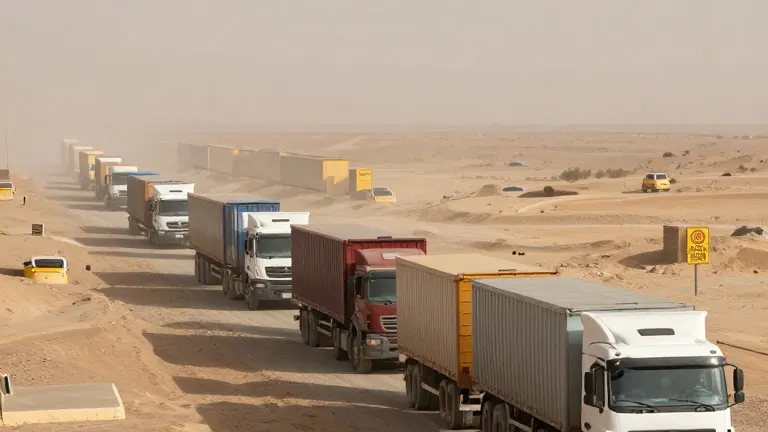
Freight trucks began moving again across the Pakistan-Iran border on Monday, ending a nine-day suspension of cargo traffic. The halt, which started on October 17, had frozen commerce at the Gabd-Rimdan and Taftan crossings in Balochistan province. Officials cited security risks as the primary reason for the initial shutdown, but the reopening is only partial.
Mir Naveed Jan Kalmati, president of the Gwadar Chamber of Commerce and Industry, confirmed that trade resumed partially over the weekend. Customs cleared consignments dated October 16 or earlier, allowing goods that were already loaded to cross. Pakistani exports including rice, potatoes, and bananas have begun flowing into Iran. Haji Noor Muhammad Shahwani, central president of the Balochistan Goods Truck Owners Association, noted that these exports are currently crossing the border.
The closure had severe economic consequences for Pakistan, which imports most of its energy from the Middle East. The stop in Iranian liquefied petroleum gas deliveries caused price spikes and shortages across the country. This happened while the Pakistani economy was already strained by shipping disruptions in the Strait of Hormuz linked to the US-Israel war on Iran. Rizwan Ahmed, a customs clearing agent near Gabd-Rimdan, said agents received instructions to file declarations for stranded trucks. He stated that customs told agents to bring in as much cargo as possible, though he did not clarify if this applied to goods loaded after October 16.
Despite the movement of Pakistani exports, Iranian cargo remains largely stuck. Reza Amiri Moghadam, Iran’s ambassador to Pakistan, said on X that changes in Pakistan’s E-Form procedure are preventing traders from dispatching cargo. The E-Form is used to record imports and their bank payments. A Commerce Ministry memorandum from October 16 withdrew a previous waiver for this procedure, taking effect immediately. Moghadam noted that consultations are underway, but several hundred LPG trucks have crossed into Gabd without being unloaded or cleared.
The security context in Balochistan remains tense. Gunmen attacked trucks near the Gabd crossing on Thursday, and the military reported killing 10 attackers in operations around the area. Balochistan accounted for 131 of the 225 armed attacks recorded nationwide in September, the highest monthly total in 12 years according to the Pakistan Institute for Conflict and Security Studies. Sajjad Haider Khan, a foreign ministry spokesman, said Pakistan adheres to all applicable sanctions regimes but did not specify if the US pressured the closure.
Security analyst Imtiaz Baloch said the US maximum pressure policy likely influenced the decision, either directly or through banking channels. He assessed that security concerns, procedural glitches, and banking systems are all involved in the current situation. The Pakistani Ministry of Commerce did not respond to requests for comment on the new paperwork rules.
Source: Al Jazeera