
Waltz Exposes Castro Family Wealth at UN
U.S. Ambassador presents evidence of $14 billion in hidden assets and private islands during a General Assembly session.
By Fatima Davis ·
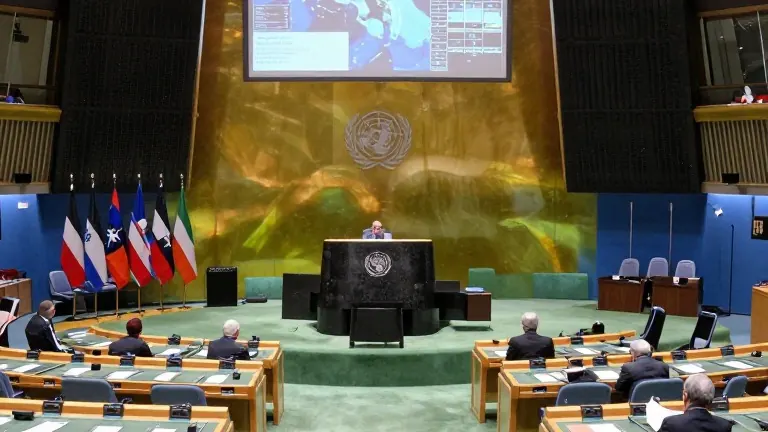
U.S. Ambassador Mike Waltz addressed the United Nations General Assembly on October 27 to detail the financial holdings of the Cuban government and the Castro family. Speaking from New York, Waltz challenged the long-standing narrative that state assets have disappeared, asserting that billions in wealth remain under the control of a small elite. He cited recent investigative reporting by The Miami Herald that uncovered secret financial records for GAESA, the Cuban military conglomerate responsible for much of the island's economic activity.
The ambassador highlighted a specific finding from that investigation: the conglomerate holds $14 billion in cash abroad. To illustrate the scale of this sum, Waltz noted that the amount could cover the salaries of every Cuban citizen for two consecutive years or stock the nation's pharmacies for more than 40 years. He contrasted this hidden liquidity with the daily shortages faced by ordinary residents, including empty fuel stations and medicine cabinets. Waltz argued that the regime continues to divert resources to overseas accounts while domestic infrastructure remains underfunded.
During his remarks, Waltz displayed photographs of luxury properties and personal items owned by members of the ruling family. He pointed to the Nave Pilar estate in Varadero, which features 14,000 square meters of land, marble floors, and a private dock. The presentation also included images of Cayo Piedra, a private island off Cuba's southern coast that houses a marina, a floating restaurant, and a lagoon for domesticated dolphins. Waltz noted that while many Cubans live without electricity, these properties maintain full power supply.
The speech was punctuated by procedural disputes with the Cuban delegation. The Cuban ambassador repeatedly interrupted Waltz, prompting the U.S. representative to quote Article 71 of the UN rules. This article states that a representative raising a point of order may not address the merits of the question. Waltz accused the Cuban delegate of attempting to silence the presentation through intimidation, comparing the scene in the UN chamber to the treatment of political prisoners in Cuba. He continued speaking despite the interruptions, emphasizing that the session took place in a free country.
Waltz also referenced historical context, quoting former President Ronald Reagan's 1979 warning that Cuba's classless society would develop a privileged elite. He displayed images of Castro wearing two Rolex watches, valued at $40,000, and the current Cuban president wearing luxury brands including Hermès ties and Montblanc pens. The ambassador linked these items to the broader pattern of wealth accumulation, noting that the family's grandson has posted images of large stacks of cash on social media. He also mentioned a 50-meter yacht used by the family for Mediterranean vacations, which requires 50,000 gallons of fuel.
The session concluded with the ambassador leaving the specific details of the asset locations to the delegates' deliberation. He stated that the evidence provided offers a clear path to identifying where the stolen wealth has gone. The next steps in the General Assembly process will involve further voting on the Cuban resolution, with the financial data presented by the U.S. delegation serving as a key reference for member states.
Source: Latin Opinion