74% of Bulk Shirt Orders Ignore the Size Distribution That Prevents Waste
Vendors report that uneven size sheets and shrinkage errors lead to unusable inventory for teams and groups.
By Harper Hassan ·
Bulk team orders often fail because of sizing errors that cannot be corrected after printing. Once a team logo is applied to a shirt, a garment that is too small or too large becomes difficult to resell or reuse. Vendors identify four recurring mistakes in size sheets that drive this waste.
The first error is splitting orders evenly. A request for ten shirts of every size ignores the natural distribution of body types. In adult groups, large, medium, and extra-large sizes account for roughly 74% of the total volume. Small and 2X-large sizes make up the next tier, while 3X-large sizes are rare. Women’s teams and groups with pre-teens shift the distribution toward smaller sizes, often comprising about 11% of the order.
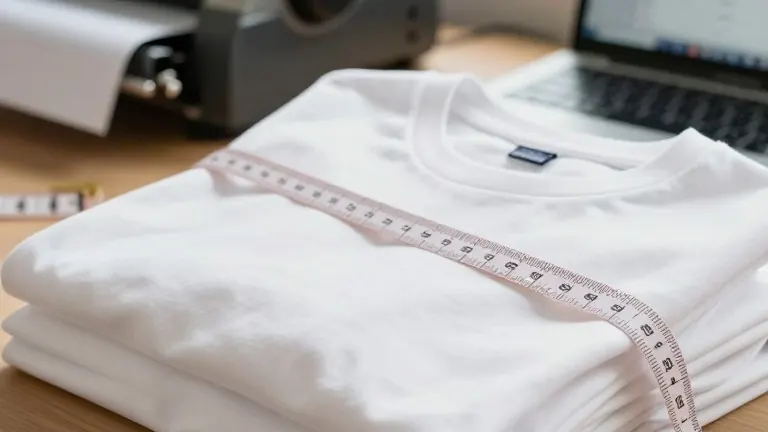
The second mistake is relying on standard size labels. Branding varies, and unisex tees fit differently than women’s cuts. A women’s medium typically corresponds to a unisex small. Semi-fitted styles run smaller, meaning a player who wears a large in a classic tee might need an extra-large in a fitted style. Vendors recommend measuring a well-fitting shirt flat across the chest and comparing that number to the manufacturer’s chart. Mixing different brands in a single order can cause two shirts marked as large to differ by a full size.
Cotton shrinkage is the third common pitfall. A preshrunk 100% cotton tee can lose 2% to 5% of its length and 1% to 3% of its width after the first wash. On a large shirt, this reduction equals one or two inches. Hot water and dryers accelerate the process. Polyester blends resist shrinkage better. Teams that wash frequently should consider ordering up a size or selecting a blend. A simple test wash of a sample shirt before full production can prevent these losses.
The final error is using one print size for all garments. Artwork sized for a medium looks small on a 3X-large and overwhelming on a youth small. Chest prints should scale with the garment, running 10 inches wide on a women’s small and 12 inches on a men’s large. Left-chest logos usually sit near 3.5 inches wide. Shops can scale artwork by size group at no extra cost. Approving proofs for the smallest and largest sizes helps catch placement issues that middle sizes might miss.
Vendors advise sending a specific size sheet that names the brand and cut. Printers can flag unusual distributions, such as a group of twenty listing nine smalls. Ordering 5% to 10% extra in medium and large sizes covers late changes and shrinkage surprises. Extras in extreme sizes are rarely needed.
Source: Yonkers Times
More Business · Buyer Beware · Report a business · Got a Story?