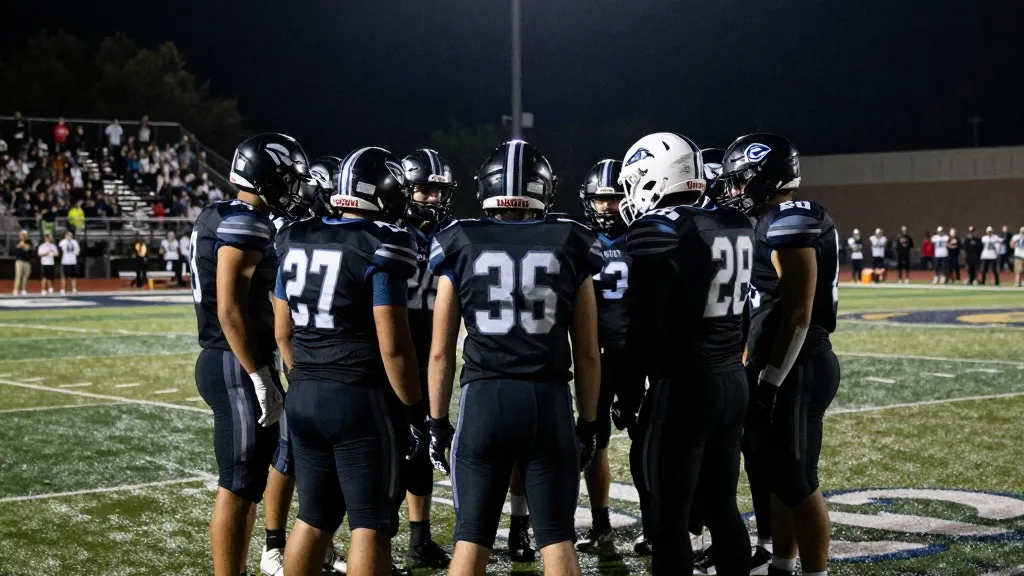
The Big Ten jump is no longer rare for top DIII performers
As more athletes bridge the gap between small college programs and major conferences, players must weigh the benefits of elite facilities against the pressure of high-level competition.
By Olga Kaur ·

UW-Madison track and field star McKena Ramos has arrived at the Big Ten powerhouse with a clear trajectory from a smaller Division III program. The Sheboygan native recently joined the Badgers after a standout tenure at UW-Oshkosh, where he claimed two national titles and earned five All-American honors in a single campaign. His transition represents a growing trend of athletes moving directly from lower-division schools to top-tier conference rosters.
The statistical landscape confirms this shift is becoming standard rather than exceptional. In the current academic year, every Big Ten institution lists at least one athlete who transferred from a Division III school onto its roster. Within the Badger football program alone, two players have followed a similar path. Junior wide receiver Ricky Finco joined the team after a season at UW-Whitewater, while offensive lineman Ryan Ramczyk transferred from UW-Stevens Point after a dominant performance that raised his profile in the NFL Draft.
The decision to move up is often personal and calculated. Ramos described setting a private benchmark for himself during his freshman year at Oshkosh. He had decided that winning a national championship would trigger a move to Division I. When he captured the indoor 800-meter and outdoor 1500-meter titles, he felt the threshold had been met. His coach, Eamon McKenna, admitted the freshman success was unexpected. McKenna noted that while Ramos was talented, he was somewhat under the radar during the recruiting phase.
Not every athlete finds the higher level suitable for their needs. Emma Paulson, a swimmer who tried the Division I scene at UW-Madison, returned to the University of St. Thomas in Minnesota after her freshman year. She realized the intense culture of the top tier did not align with her lifestyle preferences. At St. Thomas, she concluded a successful career with three individual national titles and nine All-American recognitions. Paulson explained that while her performance metrics matched Division I standards, the overall environment felt more like a part of her life rather than its entirety.
The practical differences between the two divisions are significant. Division III schools do not award athletic scholarships and typically operate with smaller facilities. In contrast, Division I programs invest heavily in infrastructure and academic support. Ramos highlighted the availability of specialized recovery tools like ice baths at Madison, which were absent in Oshkosh. He also valued the structured tutoring and exam accommodations provided for traveling athletes. Paulson noted that at St. Thomas, she is held to the same academic expectations as her non-athlete peers.
Despite the contrasting experiences, both athletes report satisfaction with their final choices. Ramos views his current position as the realization of a dream he has held since middle school. McKenna advises athletes in similar situations to carefully evaluate their ability to maintain their dominance in a new environment. He suggests that standing out at a Division III school will open doors, but the critical factor is whether the athlete can replicate their success against higher-caliber competition.
Source: The Daily Cardinal
More Sports · Oshkosh news · Report a business · Got a Story?