West Bank Economy Shudders as Lockdown Halts Trade and Displaces 2,200 Residents
Military restrictions and mass evacuations in Hebron have disrupted regional commerce and highlighted the economic stakes ahead of upcoming parliamentary elections.
By Olga Kaur ·
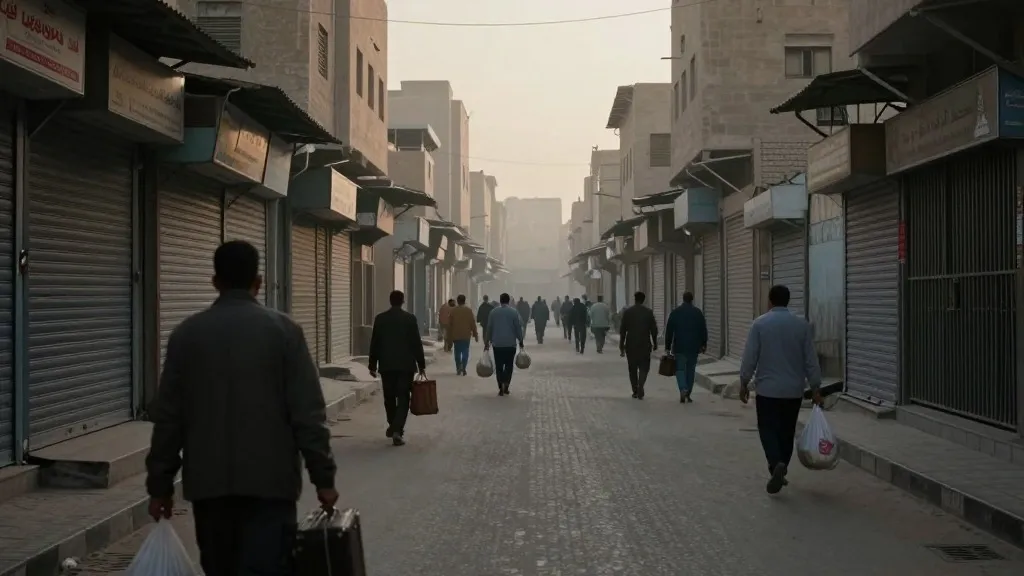
The closure of the West Bank has triggered a significant disruption in regional economic activity, forcing thousands of residents in Hebron to evacuate their homes. This sudden shift in military strategy follows a deadly attack on an Israeli army reserve base and has resulted in a total lockdown of the territory. The measures have created immediate logistical challenges for local businesses and residents, effectively isolating the most populous governorate in the region from external trade and movement.
Hebron Mayor Yousef al-Ja'bari confirmed that 2,200 people have been displaced since the operation began. The military conducted hundreds of raids starting on Friday, the day two Palestinian gunmen attacked the reserve base. Both attackers and two Israeli soldiers were killed in the incident. The scale of the evacuation has strained local resources, as families were ordered to leave their homes late at night with little time to prepare for relocation.
The economic impact is compounded by the strict enforcement of the lockdown. Al-Ja'bari noted that by Saturday, the city was sealed off, preventing both entry and exit. This isolation affects the flow of goods and services for a population of approximately 200,000 in the city and another 600,000 in the wider governorate. Issa Amro, a local political analyst, described the situation as a siege, with all entrances and exits closed since the morning of the operation, leaving residents with no safe places to hide.
Prime Minister Benjamin Netanyahu ordered a full lockdown following the attack. The military presence has intensified, with reports of raids in at least 15 areas across the West Bank. These operations spanned from Jenin and Nablus in the north to Bethlehem in the south, including central locations like Ramallah and occupied East Jerusalem. The Palestinian Prisoners' Society reported that approximately 70 Palestinians were arrested during these widespread security operations.
The Palestinian Authority, which governs the region, has criticized the actions as collective punishment. Citing home demolitions and the closure of cities, the PA urged the international community to apply pressure on Israel. This stance highlights the political and economic tension between the local administration and the Israeli military. Hamas also issued a statement, claiming that the escalation would fuel further outrage among the population, a factor that could influence consumer confidence and regional stability.
The timing of these events adds a layer of financial uncertainty. With Israeli parliamentary elections scheduled for October 27, political analysts suggest that leaders are leveraging the security situation to appeal to voters. Nour Odeh, a correspondent for the region, noted that Netanyahu and his Likud party are trailing in the polls. Consequently, the administration is presenting a strong defense posture, which may influence market sentiment and investor perceptions of regional stability in the coming days.
Netanyahu has not confirmed plans to dismantle the Palestinian Authority but hinted that a significant change awaits the organization. This statement suggests potential shifts in the administrative framework that could further impact the local economy. For now, the immediate focus remains on the human and financial cost of the lockdown, as thousands of families navigate displacement and businesses wait for clarity on when normal operations can resume.
Source: Al Jazeera
More Business · World news · Buyer Beware · Report a business · Got a Story?