Iran rejects US peace talks as Trump claims victory
Tehran says it will not negotiate the nuclear issue, while Washington debates timing for new strikes and Gulf states brace for potential escalation.
By Olga Kaur ·
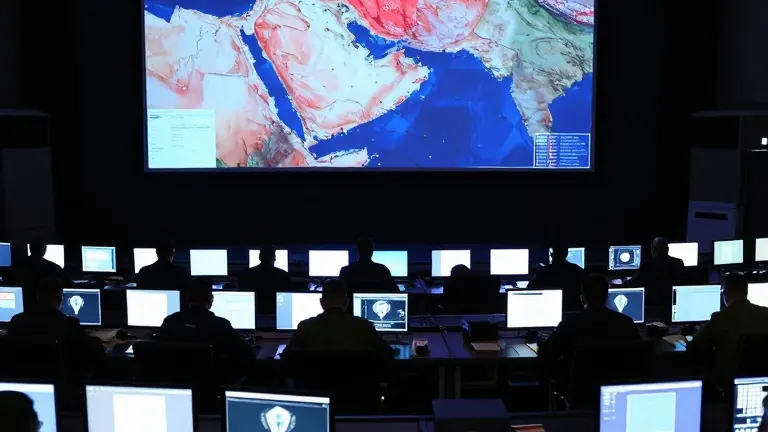
Iran’s parliament deputy speaker declared on Sunday that Tehran has no intention of engaging in peace talks with the United States. The statement came as tensions between the two nations escalated, with both sides issuing sharp warnings about the potential for renewed conflict.
Ali Nikzad, deputy speaker of Iran’s parliament, told lawmakers that the United States had nothing new to offer in potential negotiations. He asserted that the US must acknowledge Iran’s power and predicted that the Americans, not the Iranian nation, would be the ones to surrender in the conflict.
Nikzad emphasized that Tehran would not negotiate on the nuclear issue regardless of external pressure. He noted that Iran had previously granted its enemies ample opportunity for talks, but those efforts were met with broken promises and the bombardment of peaceful nuclear facilities.
The Iranian military reinforced this hardline stance earlier on Sunday. Mohammad Akraminia, the army’s spokesperson, stated that Iran’s war strategy has shifted from a purely defensive stance to an offensive approach. He warned that if a new war erupts, the conflict will not be confined to the West Asia region and could last longer than previous engagements.
US President Donald Trump offered a different assessment on Saturday. He claimed that the United States had knocked out much of Iran’s military capability, including its nuclear infrastructure. Trump said only one or two sites remained, which the US could neutralize in 10 minutes.
Despite Trump’s comments, US Secretary of State Marco Rubio indicated that a final decision on fresh strikes had not been made. Rubio stated that the United States remained open to a diplomatic solution, suggesting that negotiations were still a viable path forward.
Regional leaders are preparing for multiple outcomes. Anwar Gargash, the diplomatic adviser to the Emirati president, spoke at a conference in Manama on Sunday. He said the United Arab Emirates hoped for a breakthrough but was braced for the worst. Gargash noted that another round of conflict was not in the region’s interest.
Diplomatic channels remain active despite the rhetoric. Following a visit to Tehran this week by a Qatari delegation, Iran sent envoys to the Gulf country to continue consultations. These indirect negotiations aim to end the war, which began on February 28 with joint US-Israeli strikes on Iran.
Critics within the US government have raised concerns about the timing of potential strikes. Senator Chris Murphy called Trump’s plan to restart the war insane. Murphy warned at an event in Washington, DC, that the plan would lead to devastating escalation and damage the commitment to the rule of law.
Murphy’s comments followed reports that the US warned several Gulf Arab countries to prepare for a short, intense military offensive against Iran. The timing of such an offensive is linked to the US midterm elections held on November 3, 2026.
Source: Middle East Eye