Hebron Residents House 2,000 Displaced Palestinians as City Lockdown Tightens
Local authorities and private citizens are absorbing the economic and social strain of an Israeli military operation that has halted commerce in the West Bank's economic center.
By Fatima Davis ·
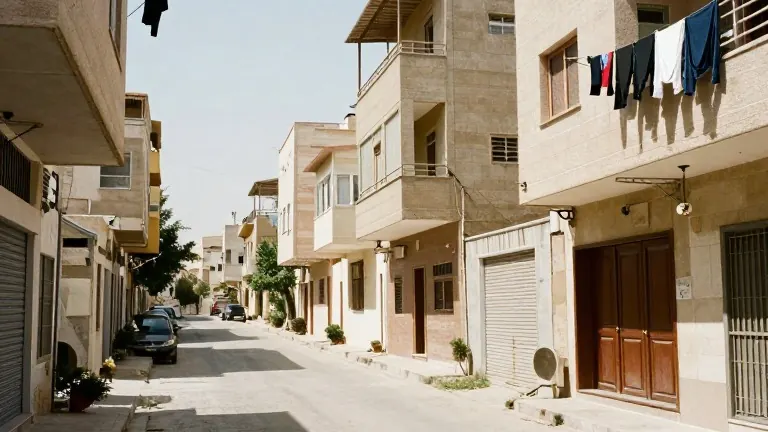
Private citizens in Hebron are absorbing the housing costs of a displacement crisis triggered by a recent military operation.
City officials reported that more than 2,000 Palestinians have been forcibly displaced since Friday. The group includes 81 pregnant women and 204 elderly people. Nearly half of the displaced population consists of babies and children under the age of 18.
The crisis began after two gunmen attacked an Israeli military checkpoint in the Farsh Al-Hawa area, killing two soldiers. Israeli forces subsequently placed a lockdown on Hebron, which functions as the economic capital of the West Bank. The military announced a focused assault on the neighborhood where the attack occurred.
Finance Minister Bezalel Smotrich, who also holds the West Bank portfolio in the Ministry of Defence, ordered the demolition of industrial facilities in the affected area. Israeli forces destroyed a three-story building and other industrial sites in Farsh Al-Hawa. City officials described the neighborhood as barely recognizable following the demolitions.
Real estate developer Mohamed Al-Rujoob opened several of his apartments in the nearby town of Dura to displaced families. His move prompted other property owners to offer their spaces. Al-Rujoob now houses three extended families, which includes 30 children. He stated that preserving dignity requires providing stable housing rather than temporary shelters.
Riyadh Khamis, a member of the local crisis committee, said philanthropists rejected the idea of keeping displaced residents in temporary shelters. The committee now coordinates government agencies, private sector partners, and civil society groups to manage the response. Khamis noted that Hebron has a history of offering aid during previous regional crises, including the pandemic and the recent conflict in Gaza.
The economic disruption extends across the city and wider district, affecting nearly 1 million Palestinians under the Israeli army's lockdown. Schools have shifted to online instruction. Hebron’s universities have suspended in-person classes for their 18,000 students until the military operation concludes. The Fawwar refugee camp, home to nearly 8,000 people, has its entrance gate closed, restricting movement for residents.
Abdel Fattah Al-Ttitti, a teacher in Fawwar camp, said residents are locked inside the camp boundaries. He noted that medical access is limited, with patients sometimes sent to a poorly equipped clinic in Masafer Yatta. The military campaign coincides with a general election scheduled for Tuesday, where Prime Minister Benjamin Netanyahu’s coalition competes for right-wing votes. Ministers Itamar Ben-Gvir and Orit Strook, who live in settlements near Hebron, support the operation as a tool to encourage voluntary migration from the West Bank.
Source: Al Jazeera
More Business · World news · Buyer Beware · Report a business · Got a Story?